
Willmott's horsetail
Equisetum willmottii
Willmott's horsetail (Equisetum willmottii) is a hybrid perennial plant species belonging to the Equisetaceae family. It is recognized by botanists as a cross between Equisetum hyemale and Equisetum ramosissimum, exhibiting traits inherited from both parent species.
What the section contains
Willmott's horsetail
The plant thrives in environments characterized by high soil moisture levels. Its natural range and cultivation sites usually include damp meadows, pond margins, and stream banks where the root system can maintain constant access to water without becoming stagnant for prolonged periods.
In terms of soil requirements, it prefers fertile, well-draining yet moisture-retentive loams or sandy soils. It is relatively adaptable to different light conditions, performing well in full sun, provided that the soil does not dry out, as well as in partial shade situations.
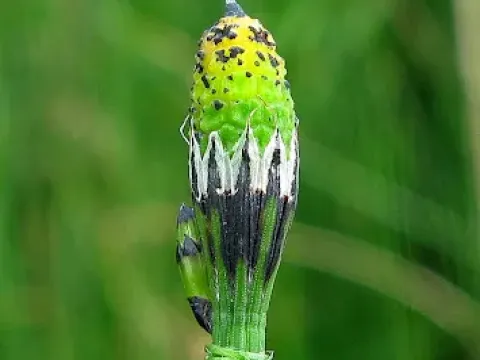
Botanically, the plant is characterized by its stiff, vertical, and jointed stems. These stems are highly aesthetic and contain significant deposits of silica, which provide the plant with its signature rigid texture and distinct green coloration throughout the growing season.
The primary use of this horsetail is in ornamental landscaping and garden design. It is frequently employed to create vertical lines in contemporary garden beds, particularly in areas associated with water features, such as rock gardens or edge plantings of garden ponds.
While generally robust, the plant can be susceptible to rust diseases if planting density becomes too high, which prevents proper airflow. Maintaining adequate spacing between individual plants is the most effective cultural method to prevent fungal development and ensure long-term health.