
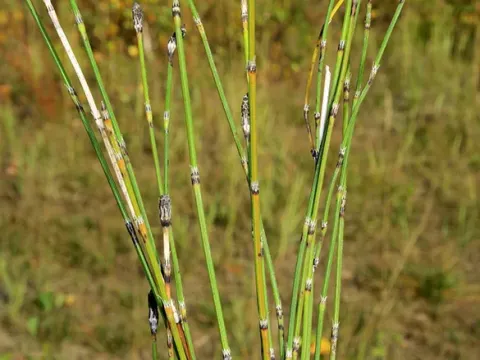
Southern horsetail
Equisetum meridionale
Southern horsetail (Equisetum meridionale) is a perennial vascular plant belonging to the Equisetaceae family. As a horsetail species, it is characterized by segmented stems impregnated with silica, which gives the plant a rigid and abrasive texture.
What the section contains
Southern horsetail
The plant originates from regions with temperate climates. It naturally thrives in moist, sandy or rocky substrates. It is commonly found in riparian habitats where the water table is relatively shallow, providing consistent moisture to the roots.
Regarding growing conditions, Equisetum meridionale requires plenty of indirect sunlight and a well-draining soil profile. While it prefers neutral to slightly acidic soil, it is highly adaptable to various moisture levels as long as the drainage is efficient.
In terms of agricultural practice, this plant is not typically cultivated on a large industrial scale. Propagation is primarily achieved through the rhizomes, which are capable of spreading extensively under favorable soil conditions.
For those looking to grow this species, providing a mulch layer or specific sand-based soil mix can mimic its natural habitat. Regular watering is necessary during the establishment phase, especially in regions with distinct dry seasons.
Equisetum meridionale possesses a natural defense mechanism against many common pests due to the high silica content in its epidermis. This makes the plant mechanically difficult for many insects to consume or penetrate.
Despite its toughness, the species can be susceptible to fungal infections if planted in areas with poor air circulation or chronic waterlogging. Root rot is the primary threat in environments that lack proper drainage.
Occasional infestations of aphids or mites can occur if the plant is grown in overly sheltered or humid greenhouse environments. These pests primarily target new, tender growth that has not yet hardened with silica.
No major agricultural diseases have been documented specifically for this species on a global scale. Prevention of threats is best managed through optimal environmental conditions rather than heavy chemical usage.
Cultural control methods such as proper spacing and removal of surrounding weeds are essential to prevent the buildup of pathogens, ensuring the health and longevity of the horsetail colony.