
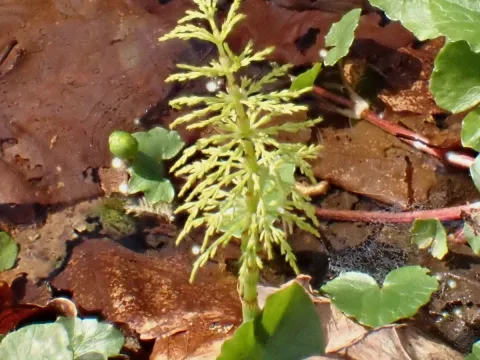
Wood horsetail
Equisetum sylvaticum
Wood horsetail (Equisetum sylvaticum) is a perennial, spore-bearing plant belonging to the Equisetaceae family. It is typically found in natural forest habitats and is known for its distinct, delicate, and feathery appearance.
What the section contains
Wood horsetail
The species is widespread across the temperate regions of the Northern Hemisphere. It thrives in moist, humus-rich soils, often inhabiting coniferous and mixed forests, as well as swampy meadow borders.
The plant exhibits two distinct phases: fertile spore-bearing stalks that emerge early in the spring and sterile, branched vegetative stalks that emerge later and provide the main biomass.
The primary growth requirements for this species include consistent soil moisture and a shaded environment, which mimics the natural conditions of the forest floor where it competes well for nutrients.
In agriculture and herbal practice, wood horsetail is recognized for its high silica content. This property is valued in soil conditioning, organic farming additives, and traditional medicinal formulations.
Wood horsetail is generally robust against typical agricultural pathogens; however, excessive moisture can occasionally promote the growth of rust fungi on its vegetative parts.
Insect pests, including various leaf beetles and miners, may feed on the frond-like branches, though they rarely cause large-scale economic damage to wild populations.
The most significant threat to the plant is the alteration of its native habitat, specifically the drainage of wetlands and the removal of forest cover which it requires.
Runoff from neighboring fields containing synthetic fertilizers or herbicides can be detrimental to the delicate root system and the overall health of the horsetail colony.
Natural suppression strategies involve maintaining the existing forest ecosystem and ensuring that land management practices do not disturb the soil surface where rhizomes grow.
Harvesting wood horsetail is best performed during the peak of the vegetative season, typically in mid-summer, when the sterile stalks are fully developed and robust.
Practitioners recommend cutting the stalks several centimeters above the ground to ensure the rhizome remains intact, allowing for sustainable regrowth in subsequent years.
Immediate processing is required post-harvest; the material should be dried in a ventilated, dark environment to maintain its chemical integrity and green color.
Drying temperatures must be carefully controlled; excessive heat can lead to the loss of volatile compounds, significantly reducing the medicinal value of the collected plant.
Finished raw material should be stored in paper-lined containers in a moisture-free area to prevent microbial contamination and to preserve its shelf life for medicinal use.