
Great horsetail
Equisetum telmateia
The great horsetail, scientifically known as Equisetum telmateia, belongs to the family Equisetaceae. This perennial pteridophyte is characterized by its robust, deep-seated rhizome system, which allows it to thrive in stable, moist environments.
What the section contains
Great horsetail
Native to temperate regions of the Northern Hemisphere, it is typically found in damp woodlands, shady stream banks, and spring-fed wetlands. Its natural distribution is largely defined by the availability of constant moisture throughout the growing season.
The plant demonstrates a strong preference for damp, fertile soils. It flourishes in areas where the soil maintains a consistent water table, and it is frequently observed in sites that provide moderate shade, protecting it from excessive transpiration.
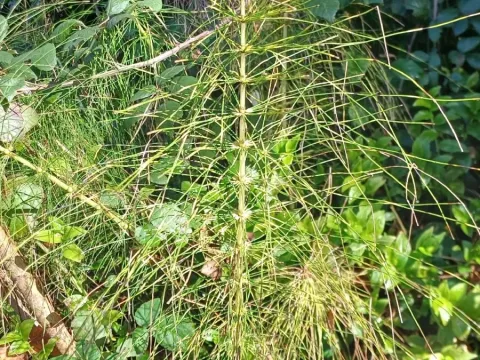
Botanically, it exhibits distinct dimorphic shoots. The fertile, non-photosynthetic shoots emerge in early spring, while the later-developing vegetative shoots are highly branched and can reach significant heights, resembling miniature pine trees.
In agricultural settings, the species acts as a bioindicator for wet, often acidic soil conditions. Farmers utilize the presence of this plant to assess the need for field drainage improvements and potential soil pH adjustments to increase land productivity.
Insect pests associated with the great horsetail include specific stem-boring flies and sawflies. These insects target the succulent tissues of the stalks, which can weaken the plant's structural integrity and its ability to store energy in the rhizomes.
Fungal pathogens may occasionally affect the plant population, manifesting as lesions or blight during periods of extreme humidity. These pathogens, however, rarely cause widespread mortality due to the plant's natural resistance mechanisms.
The most significant threat posed by this plant is its status as a persistent weed. Its underground rhizome network is highly resilient, making manual removal or simple tillage largely ineffective in eradicating infestations from arable fields.
Agricultural management requires integrated approaches, such as combining cultural practices with soil modification. Reducing soil acidity through liming is often cited as a key strategy to inhibit the expansion of horsetail colonies.
Biological control efforts focus on managing the competitive environment. By increasing the vigor of desired crops through optimized fertilization and proper field water management, farmers can create conditions that naturally suppress the encroachment of horsetails.