
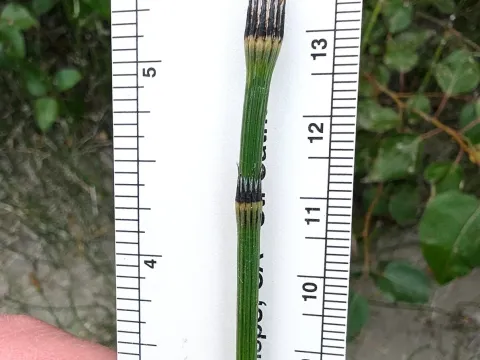
Mackay's Horsetail
Equisetum mackayi
Mackay's Horsetail (Equisetum mackayi) is a perennial, spore-bearing plant belonging to the Equisetaceae family. It is known for its rigid, jointed stems which are rich in silica, making the plant highly resilient in its natural habitat.
What the section contains
Mackay's Horsetail
The cultivation requirements are centered on moisture management. This species thrives in wetlands, pond margins, or areas with consistently damp soil conditions. It is essential to ensure that the root system remains hydrated, as dry conditions lead to rapid wilting and plant decline.
Climatic preferences include cool to moderate temperatures and high atmospheric humidity. While the plant can adapt to various light conditions, it performs best in partial shade, mimicking its natural environment found in temperate regions across the world.
In terms of agronomy, the species spreads vigorously through an extensive network of underground rhizomes. Controlling its growth is a primary task, as the plant can become invasive if left unmanaged, quickly dominating the surrounding vegetation in moist environments.
Economically, this species is mainly utilized in environmental restoration projects and as a decorative element for aquatic gardens. Its high silica content also makes it a subject of interest for biochemical research focused on organic silicon extraction.
The primary threats to Mackay's Horsetail involve fungal pathogens that target the root system in stagnant or oxygen-poor soil environments. Furthermore, foliage-eating insects can occasionally cause damage to the stems, necessitating regular monitoring to maintain healthy and vigorous growth.