
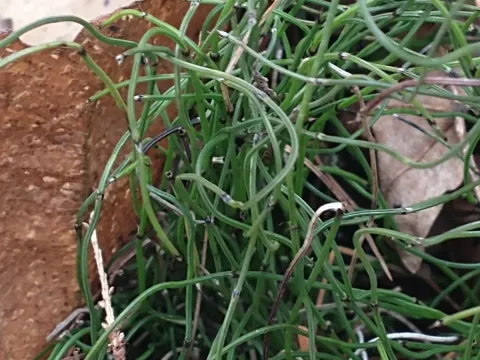
Dwarf scouring rush
Equisetum scirpoides
The Dwarf scouring rush (Equisetum scirpoides) is a member of the Equisetaceae family. It is a diminutive, evergreen, spore-bearing perennial plant. Naturally occurring throughout the circumpolar regions of the Northern Hemisphere, it thrives in damp forests, tundra, and the margins of water bodies, forming dense colonies.
What the section contains
Dwarf scouring rush
Botanically, it is distinguished by its small stature, usually ranging from 10 to 20 centimeters in height. Its stems are thin, wiry, and dark green, often curling, which gives the plant a unique architectural appearance. It spreads via an extensive underground rhizome system, creating thick, turf-like mats.
Regarding cultivation requirements, the plant demands consistently moist soil conditions to thrive. It performs best in partial shade to full sun, provided the moisture levels remain stable. In a landscaping context, it is highly valued for water-side planting or for terrariums where high humidity is maintained.
The agrotechnical management of this plant is relatively straightforward. Since it naturally occupies nutrient-poor, boggy environments, it does not require supplemental fertilization. The main focus is on maintaining the hydrology of the site; preventing the rhizomes from drying out is critical for the plant's health.
Economically, Equisetum scirpoides serves an aesthetic purpose in horticulture. Its ability to grow in saturated soil makes it useful for bio-engineering tasks such as stabilizing the banks of small ponds or drainage channels. It is widely regarded as a low-maintenance, year-round ground cover for damp environments.
The Dwarf scouring rush is exceptionally resilient and is rarely affected by major agricultural diseases. Its tissues contain high levels of silica, which acts as a physical barrier against most pathogens and herbivores. Consequently, it is largely immune to the fungal infections that typically trouble other species of horsetails.
Environmental stressors represent the primary threat to the stability of a Dwarf scouring rush patch. Prolonged drought is the most common cause of decline, leading to browning and die-back of the aerial stems. Conversely, stagnant, overly saturated conditions in winter can trigger root rot if the temperature fluctuates significantly.
Insect pests are not a significant issue for this species. There are no specialized insects that focus exclusively on this plant as a host. In rare instances, generalist pests like aphids may be found, but they rarely cause significant economic damage or require intervention with insecticides.
Competitive pressure from fast-growing weeds can jeopardize the establishment of a new colony. Because the plant is slow-growing initially, it needs protection from aggressive grasses and perennial weeds during the first year of planting to ensure it can successfully form its dense, signature mat structure.
From a biosecurity perspective, the plant is easy to monitor. No intensive monitoring or elaborate pest management programs are necessary for successful cultivation. Regular visual inspections to ensure soil moisture and the absence of aggressive invasive weed species are sufficient to maintain a healthy stand.