
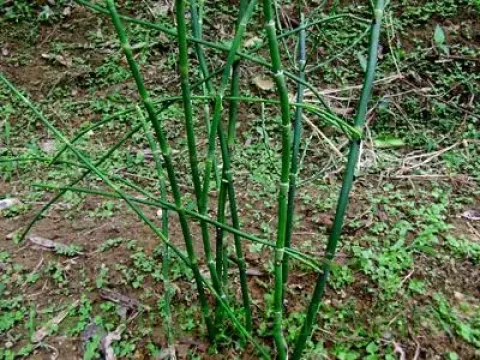
Weak horsetail
Equisetum debile
Weak horsetail (Equisetum debile) is a perennial, spore-bearing plant belonging to the Equisetaceae family. It is native to the tropical and subtropical regions of Asia, where it thrives in humid habitats such as riverbanks and marshy areas.
What the section contains
Weak horsetail
The botanical structure is characterized by slender, elongated stems that often appear delicate. Unlike temperate species, this variety exhibits a growth habit suited for high-temperature environments, often spreading through vigorous rhizome systems.
The climatic requirements are strictly defined by its tropical origin. The plant demands high humidity and a frost-free environment to maintain its metabolic activities. Cold spells are detrimental to its structural integrity and reproductive cycle.
Regarding soil conditions, Equisetum debile prefers loose, sandy, and nutrient-rich substrates with a neutral or slightly acidic pH level. High moisture retention is the most critical factor for the successful establishment of the crop.
Economic uses for this plant primarily involve its medicinal properties, specifically its traditional applications as a diuretic and anti-inflammatory agent. Its architectural beauty also makes it a candidate for landscaping in botanical gardens and water features.
Drought is the most significant threat to the survival of weak horsetail plantations. Because the plant relies on constant hydraulic saturation of the substrate, any interruption in water supply causes rapid wilting and eventual necrosis.
Pests such as various aphids and mite species can damage the soft stems. Integrated pest management (IPM) focusing on biological controls is recommended to maintain the medicinal quality of the plant material.
Fungal pathogens, particularly those causing leaf spot and stem rot, thrive under conditions of poor air circulation and excessive humidity. Proper spacing and site selection are essential for minimizing these risks.
Weed management is vital, especially during the early stages of establishment. Mechanical weeding should be performed cautiously to avoid damaging the shallow rhizome system characteristic of this horsetail species.
Environmental toxicity remains a major concern for commercial production. Since the plant is efficient at absorbing minerals from water, it is susceptible to heavy metal accumulation if grown in contaminated areas, which limits its final pharmaceutical value.