
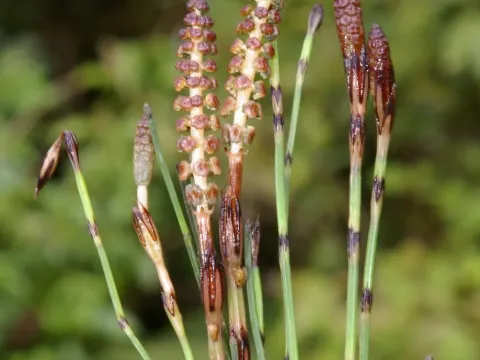
Bogota horsetail
Equisetum bogotense
Bogota horsetail (Equisetum bogotense) is a perennial spore-bearing plant belonging to the Equisetaceae family, primarily native to the high-altitude regions of the Andes.
What the section contains
Bogota horsetail
This species thrives in moist, high-mountain habitats, typically found along riverbanks, mountain slopes, and areas with volcanic-derived, mineral-rich soils that ensure proper drainage.
Climate requirements involve cool to moderate temperatures, reflecting its adaptation to Andean environments, where it experiences significant diurnal fluctuations and high ultraviolet exposure.
For successful growth, it requires a well-aerated soil structure with a slightly acidic to neutral pH, which supports the accumulation of silica, essential for the plant's robust structure.
Agricultural management should focus on maintaining constant moisture levels, mimicking the natural humidity of the mountain slopes, while avoiding the physiological stress of waterlogging.
Equisetum bogotense is economically significant mainly for its medicinal properties, widely utilized in the folk medicine of Colombia, Ecuador, and Peru.
The aerial parts are harvested for their therapeutic value, as they are rich in flavonoids, alkaloids, and silica, which provide anti-inflammatory and diuretic effects.
Post-harvest processing involves careful air-drying in shaded conditions to ensure the retention of bioactive compounds, which are often sensitive to excessive heat or light.
While large-scale industrial cultivation is limited, the plant is increasingly researched for potential applications in natural health products and modern phytotherapy.
Yields are currently dictated by the availability of natural populations, as the plant demands specific environmental niches that are difficult to replicate on a commercial farm scale.
Due to its high silica content, Bogota horsetail is inherently resistant to many common agricultural pests and microbial pathogens that typically affect succulent flora.
The primary threats to the species are habitat loss, climate change, and over-harvesting from wild populations, which requires stricter conservation management in its endemic range.
In cases of intensive or greenhouse cultivation, increased humidity levels may lead to fungal infections, which should be mitigated through proper ventilation and hygiene practices.
Insect pests are generally minimal in natural habitats, though monitoring is recommended during small-scale cultivation to prevent infestations of sap-sucking insects.
Sustainable agricultural practices are essential to balance the increasing demand for herbal medicine with the need to protect the wild biodiversity of the Andean ecosystem.