
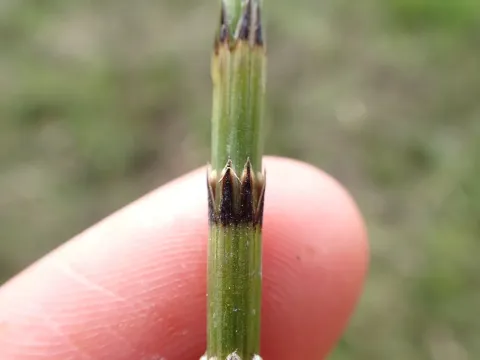
Marsh horsetail
Equisetum palustre
Marsh horsetail (Equisetum palustre) is a perennial spore-bearing plant belonging to the Equisetaceae family. It is widely recognized as a problematic agricultural weed that thrives in wet, marshy, and poorly drained soils.
What the section contains
Marsh horsetail
The plant features distinct jointed stems and a complex rhizome system that spreads rapidly. It is a biological indicator for acidic, waterlogged conditions in fields, often signaling a need for improved land drainage.
It prefers habitats such as meadow marshes, ditch banks, and damp arable land. In these environments, it forms dense colonies that compete aggressively with crops for water and mineral nutrients.
Agronomic management requires a combination of strategies, primarily focused on altering soil chemistry through liming and lowering the water table to make the environment unfavorable for the horsetail's development.
Given its ability to regenerate from small rhizome fragments, mechanical tillage alone is often insufficient and can exacerbate the spread of the weed if not combined with proper soil conditioning.
The most significant threat posed by Marsh horsetail is its toxicity to livestock. The plant contains thiaminase, an enzyme that destroys Vitamin B1, leading to severe nutritional deficiencies and neurological conditions in grazing animals.
It is remarkably resistant to natural diseases and pests because its tissues are reinforced with silica, making them unpalatable and physically difficult for many insects to consume.
Because it lacks natural biological controls, infestations of this species tend to persist for long periods if left untreated by specific chemical or soil management programs.
In cases of severe infestation, systemic herbicides are required to target the plant's deeply buried rhizome system, as surface control is ineffective in preventing regrowth.
Agricultural safety measures include ensuring that hay and silage are free from contamination by Equisetum palustre, as the dried plant retains its toxic properties, posing a year-round risk to farm animals.