
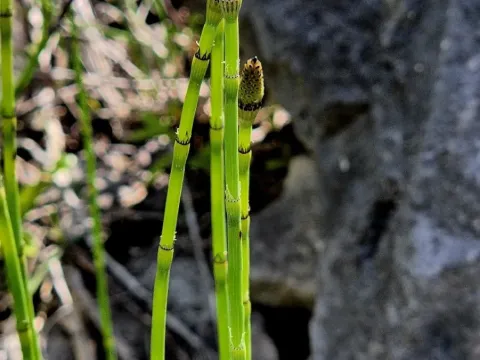
Moore's horsetail
Equisetum moorei
Moore's horsetail (Equisetum moorei) is a perennial plant belonging to the Equisetaceae family, closely related to the winter horsetail but distinct in its physiological traits.
What the section contains
Moore's horsetail
The plant features rigid, evergreen stems that remain photosynthetic throughout the year, allowing it to colonize challenging environments such as sandy shores and riverbanks.
It thrives in moist to wet substrates and prefers open, sunny locations where it can access sufficient water levels without competition from tall, dense vegetation.
For cultivation purposes, soil drainage is a critical factor; while it requires moisture, the roots should not be subjected to stagnant, anaerobic water conditions for extended periods.
The geographic range includes parts of Central and Western Europe, where it adapts well to sandy habitats, effectively stabilizing soil and preventing erosion in riparian zones.
The structural integrity of Moore's horsetail is primarily maintained by high silica concentration, providing a robust defense mechanism against most herbivorous insects and pests.
Pathogenic fungi represent the most significant threat, particularly during humid seasons, where excess moisture around the base of the stems may lead to localized decay.
Preventative measures for maintaining healthy stands include ensuring adequate airflow around the plants and avoiding the use of excessive nitrogenous fertilizers.
While the plant is generally hardy, physical damage to the protective outer layer of the stem can create entry points for opportunistic infections that may weaken the rhizomes.
Managing the surrounding flora is essential to prevent invasive species from shading out the horsetail, as limited sunlight can significantly reduce its vitality and disease resistance.