
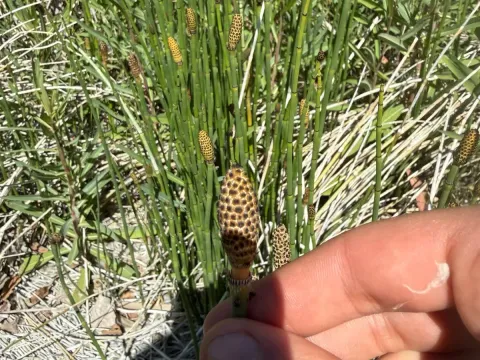
Smooth scouring rush
Equisetum laevigatum
Smooth scouring rush is a perennial, spore-bearing plant belonging to the Equisetaceae family. Native to North America, it thrives in environments characterized by high soil moisture and temperate climatic conditions.
What the section contains
Smooth scouring rush
Botanically, this species is defined by its smooth, upright stems that remain green throughout much of the growing season. It reproduces effectively through its deep-reaching, spreading rhizome system.
The plant demonstrates a strong preference for sandy or silty soils with consistent moisture levels. It is highly adapted to riparian zones and can withstand periodic flooding, which is beneficial for its growth cycle.
Optimal cultivation requires adequate light exposure, though the plant is resilient enough to handle partial shade in its natural habitat. It performs best in temperate climates without extreme seasonal fluctuations.
Agricultural management is focused on controlling the vigorous vegetative spread of the rhizomes. Proper site selection is crucial to ensure long-term productivity and ease of land maintenance.
The primary threats to smooth scouring rush crops are fungal pathogens that proliferate under conditions of stagnant water and high humidity.
Insect pests, such as specific leaf beetles, can pose a risk by feeding on the green stalks, potentially reducing the overall quality of the harvested biomass.
Competition from aggressive herbaceous weeds during the early establishment phase is a significant concern that requires consistent manual or mechanical intervention.
Soil nutrient imbalances or extreme shifts in soil pH can negatively impact plant vigor, making them more susceptible to opportunistic diseases.
Maintaining proper air circulation around the stands and ensuring adequate soil drainage during extreme rainfall events are key preventative measures against crop failure.