
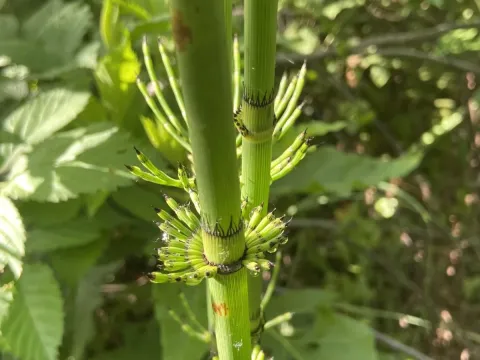
Field horsetail
Equisetum
Field horsetail (Equisetum arvense) is a perennial, spore-bearing plant belonging to the Equisetaceae family. It is considered a "living fossil," representing a lineage of plants that dominated the Earth millions of years ago.
What the section contains

Field horsetail
The plant has a cosmopolitan distribution, thriving in temperate and sub-arctic climates across the Northern Hemisphere. It is frequently found in moist fields, riverbanks, and areas with poor, sandy, or disturbed soil conditions.
Ecological requirements include high soil moisture levels and acidic or neutral pH environments. The plant is highly resilient and spreads aggressively through an extensive network of underground rhizomes that can penetrate deep into the substrate.
Agronomically, field horsetail is recognized for its preference for wet, sandy soils. Its ability to extract minerals from deep soil layers makes it a unique indicator species for specific soil types and hydrological conditions.
The plant displays a distinct biphasic growth pattern, producing fertile, non-photosynthetic shoots in early spring, followed by sterile, green vegetative shoots that serve as the primary source for medicinal or agricultural harvesting.
Field horsetail is highly valued for its exceptional silica content, which strengthens plant cell walls. In agriculture, it is used to produce fermented teas that serve as effective antifungal agents for crops such as grapes, tomatoes, and roses.
Harvesting is typically done during the summer months when the green vegetative stems are fully developed. The raw material is then dried in well-ventilated areas to prevent molding and to maintain the concentration of phytochemicals.
Beyond agriculture, the plant is a staple in herbal medicine, often utilized for its diuretic and tissue-repairing properties. Its high mineral content also makes it a popular ingredient in various organic beauty and hair-care formulations.
Industrial demand for organic fertilizers and natural pesticides continues to drive interest in sustainable harvesting of wild populations. Ensuring the purity of the harvest is crucial for quality assurance in both the medical and cosmetic sectors.
Future agricultural applications may include using horsetail-derived extracts as a biostimulant to improve crop resilience against abiotic stresses, such as drought or mechanical damage, by reinforcing the plants' structural integrity.
Equisetum arvense is remarkably resistant to pests and diseases. Its structural resilience, provided by silica deposits, acts as a biological deterrent against most herbivorous insects, significantly reducing the need for chemical intervention.
While the plant is generally hardy, it can occasionally be affected by rust fungi, though such infections are rarely lethal or impactful enough to hinder the plant's spread or productivity on a large scale.
The primary challenge for managers in agricultural settings is not plant health, but containment. Because of its vigorous rhizomatous growth, it is often viewed as a persistent weed that competes with crops for nutrients and space.
Liming soils is the most common management strategy to reduce horsetail colonization, as the plant prefers acidic environments. Raising the soil pH effectively creates an inhospitable condition for further expansion.
Integrated weed management, including mechanical cultivation and selective systemic herbicides, remains the standard for controlling field horsetail in non-target agricultural plots to ensure maximum yield for primary crops.