
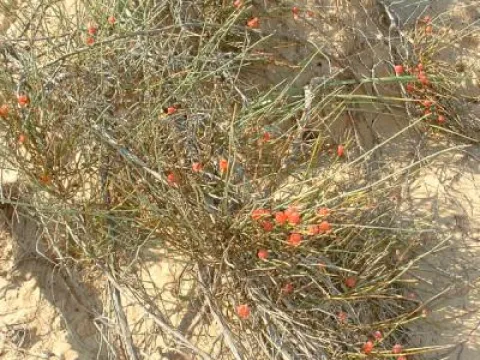
Ephedra major
Ephedra major
Ephedra major is a perennial shrub belonging to the Ephedraceae family. Successful cultivation requires careful attention to the propagation process, which is primarily done through seeds or vegetative cuttings in nursery settings.
What the section contains
Ephedra major
Seeds require a period of stratification to break dormancy before being sown in well-drained, sandy substrates. Planting depth should be minimal to ensure optimal germination rates in controlled environmental conditions.
Vegetative propagation via cuttings is a common practice during the summer months. Cuttings are placed in light, porous media under intermittent mist or plastic covers to maintain the high humidity needed for root development.
Seedling growth is characteristically slow during the first few years. Growers must ensure that young plants are protected from competition and that the soil moisture remains consistent but not waterlogged.
Establishing a permanent plantation requires adequate spacing between individuals to accommodate the shrub's architectural growth habit and to ensure sufficient light penetration to the inner branches.
Ephedra major thrives in full sun exposure and is highly intolerant of shade. Adequate lighting is crucial for both plant vigor and the secondary metabolism that produces the desired alkaloids in its green shoots.
The plant is exceptionally drought-tolerant, naturally adapted to arid and semi-arid environments. It prefers poor, rocky, or sandy soils that provide excellent drainage, as saturated soil can quickly lead to root decay.
Climate adaptability is one of the strengths of this species, as it handles significant temperature fluctuations well. It is hardy in cold winters, provided it has an adequate dormancy period without excessive soil moisture.
Soil pH should ideally be neutral to slightly alkaline. The plant does not require high levels of fertilization; in fact, over-fertilizing can negatively influence the chemical composition of the plant tissues.
Proper aeration is essential for root health. In heavy soil types, amendments such as coarse sand or gravel are necessary to prevent compaction and ensure that the root zone remains oxygenated throughout the year.
The harvest of Ephedra major focuses on the green branches containing medicinal alkaloids. Industrial-scale harvesting generally commences once the plants reach a mature stage, typically after 4 to 5 years of growth.
Yield consistency depends on the sustainable management of the shrubs. Harvesting should be done selectively to ensure that the plant retains enough photosynthetic surface to recover and continue growth for the following season.
Post-harvest handling requires immediate drying of the biomass. Proper drying techniques—typically shade-drying with active ventilation—are necessary to preserve the stability of active compounds and prevent microbial spoilage.
Economic viability is linked to efficient harvesting methods. While manual cutting remains the standard due to the plant's structure, advancements in light mechanical pruning can improve throughput on larger plantations.
Regular plantation monitoring allows for the rotation of harvest areas, ensuring that each bush has ample time to rejuvenate between cutting cycles, thereby extending the productive lifespan of the plantation.
Fungal diseases, particularly those affecting the roots and stems, are the primary threats to Ephedra major. These conditions are usually triggered by poor drainage or high humidity, which favor the spread of pathogenic spores.
Pests such as aphids and spider mites can infest the green shoots, especially during dry, hot weather. These pests weaken the plant by feeding on sap, which can impact the overall health and quality of the biomass.
- Root rot caused by stagnant water in the root zone.
- Powdery mildew in areas with insufficient air circulation.
- Scale insects that adhere to stems and drain plant energy.
- Various soil-borne pathogens that thrive in compacted, damp soils.
Prevention is the most effective management strategy. Maintaining proper plant spacing, ensuring excellent soil drainage, and conducting regular sanitation by removing dead debris significantly reduce the risk of infestation.
Chemical treatments should be used with extreme caution to avoid contaminating the medicinal material. Biological controls or targeted, non-residual organic options are preferred to maintain the integrity of the plant products.