
Ephedra foeminea
Ephedra foeminea
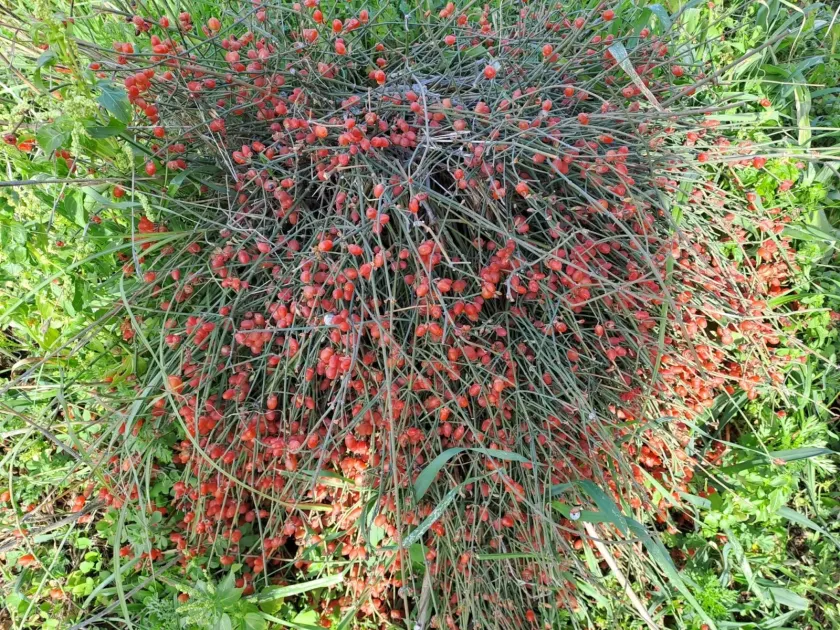
Description
Sowing dates
Propagation of Ephedra foeminea is mainly carried out by seeds or vegetatively through cuttings. Seeds should be sown in late autumn to ensure natural stratification in the soil for spring germination.
When using cuttings, they are harvested during the active growing season and treated with rooting hormones to improve survival rates.
The optimal sowing depth is 1–2 centimeters in loose, well-draining substrate to allow sufficient air exchange for the developing seeds.
Sowing should take place in well-drained areas, as moisture stagnation is critical and can kill young seedlings within the first months.
Transplanting to a permanent location is best performed in early spring once the soil has warmed up, preventing potential frost damage to the root system.
Growing requirements
Ephedra foeminea is a classic xerophyte, perfectly adapted to arid conditions and intense sunlight. It belongs to the Ephedraceae family and exhibits high resistance to extreme temperature fluctuations.
For optimal growth, the crop requires sandy or rocky soils with a neutral to slightly alkaline pH, which prevents root rot.
Water stagnation is detrimental to this species as it triggers rapid decay of the root collar, eventually destroying the entire plant.
The plant thrives in open, well-ventilated areas where proper solar exposure is maintained to ensure the synthesis of active secondary metabolites.
Soil preparation involves deep tillage and the installation of a drainage layer to promote the growth of a robust and branched root system.
Yield
Commercial utilization of Ephedra foeminea focuses on the harvest of green biomass, specifically young shoots that contain medicinal alkaloids such as ephedrine.
Harvesting is conducted during the peak concentration period of active ingredients, typically late summer or early autumn before the plant enters dormancy.
Crop yields on a commercial scale depend heavily on planting density and the age of the shrubs, while periodic radical pruning stimulates new growth.
Drying of the shoots is performed in well-ventilated facilities or controlled-temperature dryers to preserve the plant's essential pharmacological properties.
The final product volume is also influenced by seasonal weather, as excessive rainfall can negatively impact the concentration of targeted alkaloids.
Main diseases and pests
The primary threats to Ephedra foeminea are fungal diseases that flourish under conditions of excessive soil moisture or poor air circulation.
Powdery mildew may attack the plant's aerial parts if air circulation is restricted within greenhouses or high-density nurseries.
Pests, such as spider mites, can damage the shoots during hot and dry weather by draining fluids and reducing the plant's overall vigor.
Root rots remain the most dangerous adversaries, caused primarily by inappropriate site selection featuring heavy or clay-based substrates.
To mitigate these risks, regular phytosanitary monitoring is essential, along with the application of broad-spectrum fungicides at the first sign of infestation.