
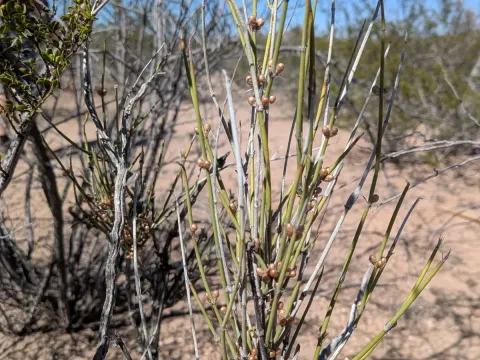
Ephedra trifurca
Ephedra trifurca
Ephedra trifurca, commonly known as Longleaf Jointfir, is a perennial shrub belonging to the Ephedraceae family. It is native to the arid regions of the southwestern United States and northern Mexico, where it thrives in harsh desert environments.
What the section contains
Ephedra trifurca
The plant is highly adapted to extreme temperature fluctuations and limited water availability. It prefers sandy or rocky, well-drained soils, reflecting its evolutionary trajectory as a xerophyte in desert ecosystems like the Sonoran and Chihuahuan deserts.
Botanically, it features scale-like leaves and segmented green stems that perform most of the photosynthesis. This morphological adaptation significantly reduces water loss, allowing the plant to sustain itself under intense sunlight and prolonged drought.
Agricultural cultivation requires strict adherence to drainage management. Waterlogging is the primary cause of failure, as the root system is highly sensitive to excessive soil moisture. The plant generally does not require fertilization and thrives in nutrient-poor substrates.
In terms of economic utility, Ephedra trifurca is historically significant for its medicinal properties due to the presence of alkaloids. Furthermore, it is used in land management to control soil erosion and stabilize sandy soils in desert areas.
Fungal pathogens associated with root rot are the primary threats to this crop. These diseases almost exclusively occur when the soil remains too damp, preventing the roots from accessing necessary oxygen.
Pests such as mites and certain sap-sucking insects may infest the shrub during extreme dry spells. While the plant is inherently resilient, consistent environmental stress can lower its natural defenses against these invaders.
Physical damage to the stems can act as an entry point for opportunistic pathogens. It is essential to ensure that any pruning or maintenance is done with sanitized tools to prevent the spread of infections throughout the crop.
Weed competition is generally not an issue due to the plant's natural habitat; however, aggressive invasive grasses may sometimes compete for water, which should be mitigated through manual weeding.
Overall, monitoring for abnormal discoloration on the stems is the best diagnostic practice. Healthy plants should maintain a consistent, healthy green or grey-green hue, with no visible signs of wilt or necrosis.