
Ephedra sinica
Ephedra sinica
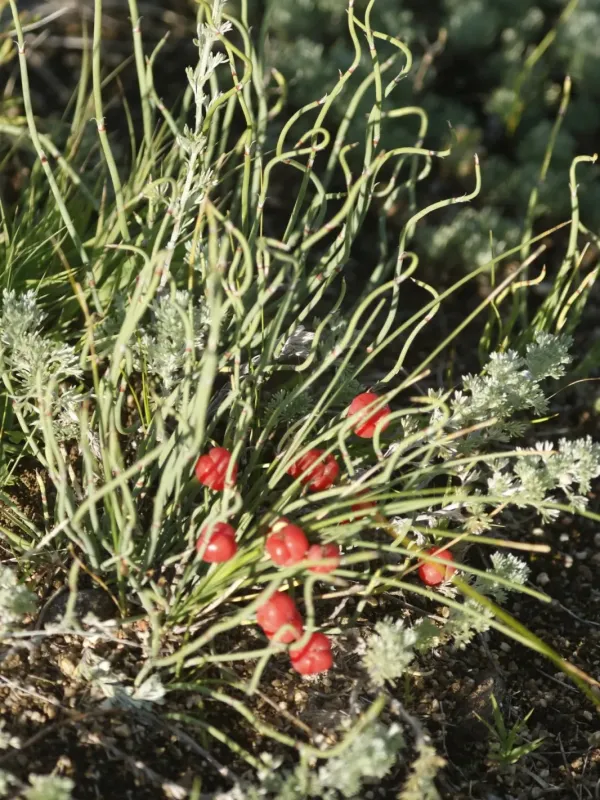
Description
Sowing dates
The sowing of Ephedra sinica is primarily carried out in the spring when soil temperatures reach 10–12°C. While the seeds exhibit good germination rates, they require a pre-sowing stratification period of 30–45 days at low temperatures to enhance emergence uniformity.
For commercial cultivation, a row-cropping method is recommended, with row spacing of approximately 45–60 cm. Seeds should be sown at a shallow depth of 1–2 cm to ensure optimal contact with moist soil and sufficient oxygen access for the developing sprouts.
During the first year of growth, the crop develops quite slowly, establishing a small root system and producing only a few shoots. It is crucial to maintain weed-free conditions, as young ephedra plants are poor competitors against fast-growing field weeds.
In large-scale farming, late-autumn sowing may be practiced in temperate climates where early spring frosts could damage seedlings. In such cases, the seeds undergo natural stratification directly within the soil during the winter months.
An optimal stand density ranges from 80,000 to 100,000 plants per hectare. This density provides sufficient nutritional space for the development of aerial biomass, which contains the essential bioactive compounds needed for harvest.
Growing requirements
Ephedra sinica, belonging to the Ephedraceae family, is a perennial subshrub adapted to harsh environments. In its natural habitat, it thrives on rocky slopes, sandy soils, and arid steppes.
The plant is highly demanding regarding light exposure. It is an obligate sun-lover; therefore, any shading causes stem elongation, reduces tissue firmness, and leads to a significant decline in the concentration of alkaloids within the plant material.
The crop has moderate soil requirements. It tolerates nutrient-poor, rocky, sandy, and stony substrates exceptionally well, but it is highly sensitive to waterlogging and poor drainage, which can easily lead to root system decay.
Ephedra is distinguished by its high drought tolerance and frost resistance, common traits of plants in arid zones. It can withstand significant diurnal temperature fluctuations, making it a suitable candidate for cultivation in continental climates.
To produce high-quality raw material, the application of nitrogen fertilizers should be minimized. Excessive nitrogen promotes vegetative growth at the expense of alkaloid synthesis, thereby lowering the pharmacological value of the green stems.
Yield
The yield of dry aerial mass of Ephedra sinica depends heavily on the age of the plantation. Stable commercial harvests typically commence in the third or fourth year of growth, once the bushes reach a mature size.
On average, specialized plantations can yield 5 to 10 centners of dry raw material per hectare when modern agronomic practices are applied. Actual figures may vary based on soil fertility and the intensity of solar radiation in the production region.
Timely pruning is a critical factor for productivity. Regular harvesting intervals stimulate the regrowth of fresh, young shoots, which contain the highest concentrations of ephedrine and pseudoephedrine.
As a perennial crop, a single plantation can remain productive for 10–15 years with proper management. After this period, productivity naturally declines, necessitating field renovation through plowing and re-seeding.
Quality control of the harvest is conducted via laboratory analysis to measure alkaloid content. It is the specific chemical composition, rather than the total dry biomass, that determines the economic viability of this crop.
Main diseases and pests
Ephedra sinica demonstrates high resistance to most diseases common to standard agricultural crops. However, in conditions of high humidity or poor aeration, fungal infections leading to root collar rot can occur.
Among pests, insects that damage green stems pose the greatest threat. Instances of spider mite infestation have been observed during prolonged droughts, causing discoloration and desiccation of affected plant parts.
Inadequate crop rotation and the buildup of soil-borne pathogens can lead to root rot. To prevent this, it is recommended to maintain spatial isolation between older plantations and newly established fields.
Sucking pests can act as vectors for phytoplasma diseases, which cause shoot deformation. Control measures involve the application of systemic insecticides at the beginning of the vegetation period to mitigate population buildup.
Agronomic monitoring should include regular inspections for powdery mildew or localized necrosis. Effective protection is achieved by creating environmental conditions unfavorable to pests, such as controlled irrigation and ensuring the field remains free of dense weed competition.
Harvesting
Harvesting of the stems is conducted during the period of peak alkaloid accumulation, which generally coincides with the budding phase or the onset of flowering. At this stage, the plant's chemical profile is optimally balanced for pharmaceutical use.
Stems are harvested using pruning shears or specialized mechanical cutters at a height of 5–10 cm above the soil surface. It is essential not to damage the crown or root system to ensure vigorous regrowth for the following season.
Post-harvest material must be dried immediately in well-ventilated areas or in controlled-temperature dryers at no higher than 45–50°C. Overheating can cause the degradation of active components and reduce the overall quality of the product.
Stored raw material must be kept protected from direct sunlight and high humidity. Ephedra is highly hygroscopic; therefore, it should be packaged in paper bags or specialized containers that prevent moisture absorption.
Transportation of the raw material must comply with strict safety regulations, as the product contains potent bioactive substances and is subject to rigorous regulatory oversight in most jurisdictions.