
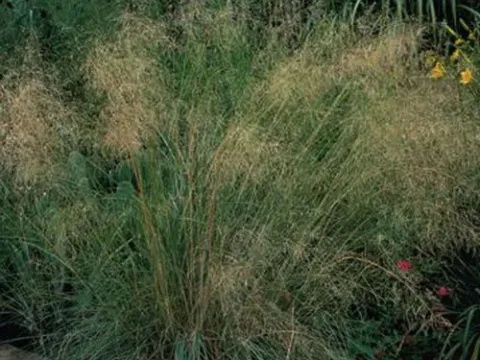
Eragrostis chloromelas
Eragrostis chloromelas
Sowing of Eragrostis chloromelas should be performed when soil temperatures reach +15°C to +18°C. Being a warm-season grass, it requires consistent warmth to ensure successful germination and the establishment of a robust root system.
What the section contains
Eragrostis chloromelas
Given the small size of the seeds, they should be planted at a shallow depth of 1–2 centimeters. Proper seed-to-soil contact is crucial, which is why rolling the field immediately after sowing is recommended to prevent the seeds from drying out.
The optimal time for sowing is during the spring. In regions with milder climates, late summer sowing is possible provided that moisture levels are sufficient for the seedlings to establish themselves before the onset of winter dormancy.
For high-quality results, it is essential to use high-purity seeds. The seedlings develop slowly during the first few weeks, so keeping the field free of competitive weeds during this early stage is vital for the survival of the stand.
Monitoring the moisture level in the topsoil is critical during the two weeks following sowing. Once the seedlings have reached the stooling phase, the plant becomes significantly more resilient to environmental stressors and typical weather fluctuations.
Eragrostis chloromelas belongs to the Poaceae family and is widely recognized for its impressive drought tolerance. It is well-suited for cultivation in arid or semi-arid regions where water availability is a limiting factor for traditional crops.
The plant performs exceptionally well on well-drained sandy or loamy soils. It demonstrates a high level of adaptability to low-fertility soils and can survive in acidic conditions where other common grasses might fail.
A key requirement for the successful cultivation of this species is avoiding waterlogged conditions. Poor drainage can quickly lead to root decay, so selecting sites with natural slopes or effective artificial drainage systems is a priority.
This grass is highly photophilous and requires full exposure to sunlight. Shaded areas will significantly reduce biomass production and weaken the plant, making it unsuitable for areas under dense tree canopies or tall shrubbery.
While the grass is hardy, periodic nutrient management helps maintain high yields. Nitrogen application can be beneficial, especially during the active growth phase, to ensure a lush and productive stand year after year.
The yield of Eragrostis chloromelas depends heavily on the management of grazing cycles and the frequency of mowing. Under ideal conditions, it produces high volumes of high-quality forage suitable for various types of livestock.
When used as pasture, the species shows an excellent capacity for regrowth. This endurance allows for intensive grazing rotations, provided that the plants are given adequate recovery time to restore their energy reserves in the root zone.
The nutritional value of the forage is highest before the flowering stage. Farmers aiming for high-quality hay should aim to harvest the crop during the late vegetative stage to maximize protein and mineral content for animal consumption.
For seed production, harvesting should be done when seeds reach maturity but before natural shattering occurs. Proper timing is critical to minimize yield losses, as the seeds can fall easily once fully ripe.
With correct management, a single sowing of this grass can remain productive for many years, providing a cost-effective solution for land managers and livestock farmers aiming for stable long-term forage production.
Eragrostis chloromelas is naturally resistant to most common grass diseases. Its robust nature and evolutionary adaptation to harsh environments make it a low-risk crop in terms of fungal or bacterial infection outbreaks.
If management practices are poor, such as when stands become too dense or when moisture levels are consistently too high, some fungal issues like rust may emerge. Maintaining optimal plant density is the primary preventive measure.
Insect pests typically do not cause economic damage, though monitoring for root-feeding larvae during the early establishment phase is recommended. Generally, the crop does not require regular chemical intervention.
Weed control is primarily necessary during the establishment phase. Once the stand is fully developed, the vigorous growth of the grass effectively suppresses most weeds, reducing the need for herbicide application.
Strategic grazing is another aspect of protection. Overgrazing can weaken the stand, making it susceptible to invasive species. Implementing a rest-rotation system helps maintain the dominance of the desired grass and ensures long-term field health.