
Ephedra minuta
Ephedra minuta
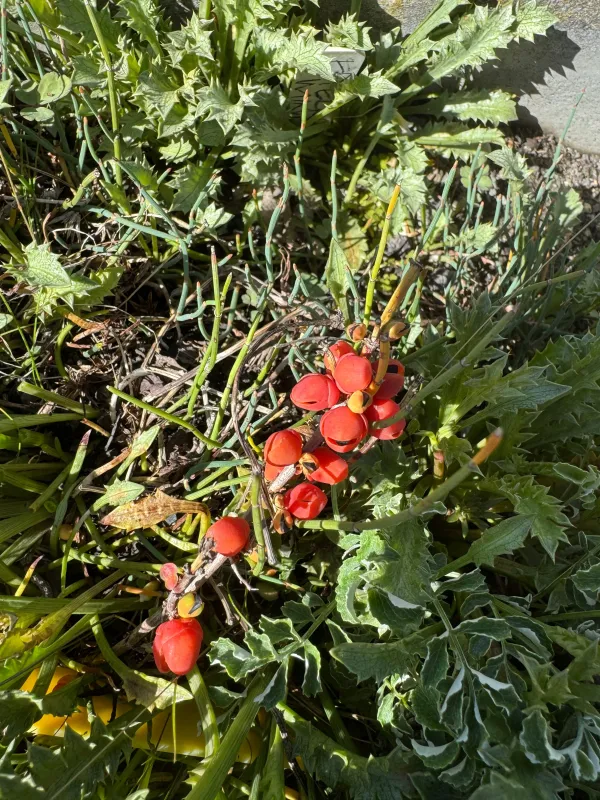
Description
Sowing dates
Propagation of Ephedra minuta is primarily conducted through seeds, which often exhibit dormancy that requires cold stratification to ensure a high germination rate.
The sowing process is best executed in early spring when the soil temperature stabilizes, providing the necessary warmth for the seeds to initiate growth.
Seeds should be sown at a shallow depth of approximately 1 centimeter in well-aerated, sandy substrates to facilitate successful emergence without causing rot.
Scarification techniques are sometimes employed to enhance water absorption, as the outer seed coat can be quite resilient to natural moisture penetration.
Regular but moderate watering is essential during the initial germination phase to keep the substrate slightly moist without inducing waterlogging.
Growing requirements
As a member of the Ephedraceae family, Ephedra minuta is a low-growing, xerophytic shrub native to harsh, rocky, and high-altitude desert environments.
The plant thrives in nutrient-poor, rocky, or limestone-based soils with exceptional drainage, as it cannot tolerate stagnant water around its root system.
Full sun exposure is a non-negotiable requirement for this species; it requires high light intensity to maintain its characteristic structure and chemical composition.
It displays remarkable resilience to extreme temperature fluctuations and severe drought, making it well-suited for regions with arid and continental climates.
Soil pH should ideally be neutral or slightly alkaline, as acidic soils may hinder the plant's nutrient uptake and general physiological health.
Yield
Due to its naturally diminutive size and slow growth rate, Ephedra minuta is rarely cultivated for large-scale agricultural output or commercial extraction.
Yield is measured by the total weight of harvested lignified stems, which can only be collected after the plant has reached its full structural maturity.
Harvesting frequency must be carefully controlled, allowing several years of recovery between cuttings to prevent the exhaustion of the plant's limited resources.
The economic value of this species is largely niche, focused on botanical preservation and its utility as a soil stabilizer in degraded arid lands.
For scientific or herbal purposes, the yield quality is assessed by the concentration of secondary metabolites, which are influenced by seasonal sun exposure.
Main diseases and pests
The most significant threats to Ephedra minuta in a cultivated setting are fungal pathogens caused by excessive soil moisture and poor airflow.
Soil-dwelling larvae and nematodes can pose risks to the root integrity, particularly in plants grown in non-sterile or improperly managed garden soil.
Physiological distress is frequently observed when the plant is kept in containers with poor drainage, leading to chlorosis and eventual stem dieback.
Weed competition should be minimized during the early development stages, as the plant grows slowly and cannot easily compete with aggressive vegetation.
Preventative measures include maintaining wide spacing between individual plants to ensure adequate ventilation and prevent the spread of surface-borne diseases.
Harvesting
Harvesting involves the selective pruning of stems using clean, sterilized shears to minimize physical stress to the woody base of the plant.
It is vital to harvest only a portion of the total biomass, ensuring that enough photosynthetic surface remains to sustain the plant's life processes.
Post-harvest, the stems must be dried quickly in a shaded, well-ventilated area to preserve the chemical integrity of the active constituents.
The timing of the harvest should coincide with the peak of the plant's metabolic activity, usually shortly after the transition from the flowering phase.
Stored dried stems should be kept in a cool, dry environment away from light to maintain the potency and quality of the raw material for long-term use.