
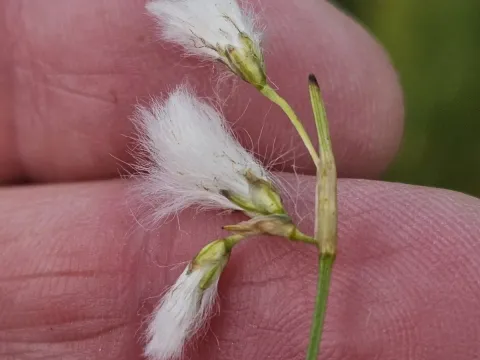
Slender cottongrass
Eriophorum gracile
Slender cottongrass (Eriophorum gracile) is a perennial herbaceous plant belonging to the Cyperaceae family. It is typically found in temperate and cold regions of the Northern Hemisphere, thriving in wetland environments like bogs and fens.
What the section contains
Slender cottongrass
Botanically, the plant is distinguished by its slender stems and narrow leaves, which contrast with other, more robust species of the genus. Its creeping rhizomes allow it to colonize wet, peaty soil effectively, forming characteristic clusters.
The plant requires high water tables and acidic, nutrient-poor conditions to grow successfully. It is highly intolerant of drought, making stable hydrology the most critical factor for its long-term survival in any given habitat.
As a light-demanding species, Eriophorum gracile performs best in open, sunny wetlands. It is highly adapted to cool climates and can withstand significant frost, which is common in its native northern ranges.
From an agronomic and restoration perspective, this species is valuable for re-vegetating disturbed wetlands and restoring the natural function of peatlands, rather than for large-scale agricultural production.
There is no standard industrial harvesting for Slender cottongrass. In specialized environmental projects, seed collection is performed manually to ensure the genetic diversity and proper propagation of the species in restored bog areas.
Harvesting techniques focus on preserving the substrate integrity. Any removal of the plant material must be conducted in a way that minimizes disturbance to the underlying peat, as the root structure is vital for soil stability.
The primary threat to Slender cottongrass is habitat loss through drainage and land reclamation. When the hydrological balance is shifted towards drier conditions, the species is quickly displaced by more opportunistic grasses.
While the plant does not face significant agricultural pest issues, invasive species encroachment and changes in water chemistry due to runoff can negatively impact its population density and health in its natural wild habitats.