
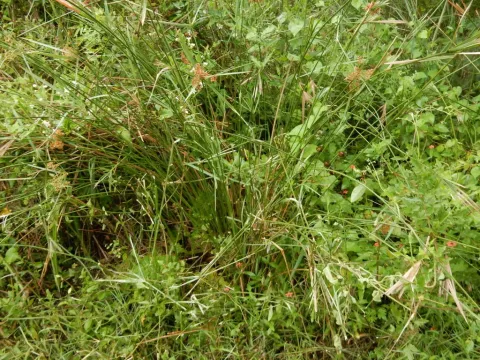
Six-angled sedge
Cyperus sexangularis
The six-angled sedge (Cyperus sexangularis) is a perennial herbaceous plant belonging to the Cyperaceae family. Its common name is derived from its distinct botanical structure, specifically the stems which exhibit a clear hexagonal cross-section, setting it apart from many other species within the genus.
What the section contains
Six-angled sedge
Native to the tropical and subtropical regions of Africa, this plant is naturally adapted to wetland environments. It thrives in habitats such as riverbanks, marshes, and periodically flooded meadows, where the substrate remains waterlogged for the vast majority of the year, allowing the plant to flourish.
The primary cultural requirement for this species is a consistent water supply. In an agricultural or horticultural setting, the six-angled sedge needs to be planted in soil with high moisture retention capacity. It is essential to prevent the root zone from drying out, as the plant is not drought-tolerant and will suffer significant stress under arid conditions.
Regarding soil conditions, this sedge prefers nutrient-rich, organic-heavy substrates that are slightly acidic to neutral in pH. As a tropical species, it requires warmth and will not survive frost; therefore, cultivation in temperate zones is usually restricted to greenhouse environments or seasonal outdoor displays during the summer months.
In terms of practical use, the six-angled sedge is valued primarily for its aesthetic appeal in water gardening and ornamental landscaping. Additionally, due to the high fiber content and structural integrity of its stems, it has historically been utilized in artisanal weaving to create durable mats, baskets, and other decorative functional objects.