
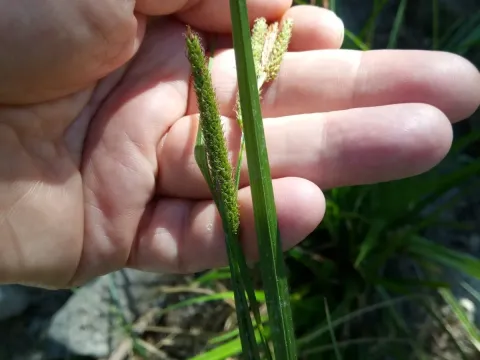
Small-fruited sedge
Carex microcarpa
Small-fruited sedge (Carex microcarpa) is a perennial herbaceous plant belonging to the Cyperaceae family. It is naturally adapted to moist habitats and serves as a vital component of wetland vegetation across temperate regions.
What the section contains
Small-fruited sedge
The plant thrives in soil conditions characterized by high moisture content, specifically in riparian zones, marshy meadows, and peatlands. It prefers neutral to slightly acidic soils rich in organic matter for optimal biomass accumulation.
As an agricultural plant, it demonstrates excellent tolerance to anaerobic soil conditions and periodic inundation. This resilience makes it a suitable candidate for land reclamation and soil stabilization in low-lying agricultural areas.
Climatic requirements for successful growth include sufficient precipitation throughout the growing season and resilience to frost. The plant enters dormancy during winter and effectively regenerates from its robust rhizome system in the spring.
Biological features include a high capacity for vegetative propagation, which leads to the formation of dense swards. This density provides superior resistance to mechanical damage, such as trampling by livestock, making it durable for grazing purposes.
Small-fruited sedge is utilized primarily as a forage resource in wetland management systems. Harvesting is most effective when the plants reach the early heading stage, ensuring a balance between biomass quantity and nutrient quality.
The harvesting process requires careful management of drying techniques due to the succulent nature of the leaves. Mechanical conditioning, such as the use of crimpers, is recommended to break down the waxy cuticle and expedite moisture loss.
Timing is critical in order to avoid lignification, as older plants show significantly lower digestibility and mineral content. Early season mowing is essential to maintain a high feed value for ruminant animals.
In addition to hay production, the species contributes to the structural integrity of pastures. Its deep-reaching root system helps maintain soil structure and promotes healthy soil microbial activity in damp conditions.
Post-harvest management involves monitored grazing cycles to prevent overgrazing. By allowing for adequate recovery periods, farmers can ensure the long-term productivity and sustainability of the sedge-dominated grassland.