
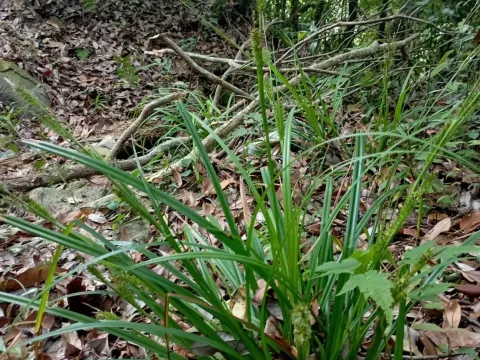
Short-awned sedge
Carex brevicuspis
Short-awned sedge (Carex brevicuspis) is a perennial member of the Cyperaceae family. It typically propagates via seeds and creeping rhizomes, forming dense clusters in suitable wetland environments.
What the section contains
Short-awned sedge
For cultivation, seeds are sown in early spring once soil temperatures reach a stable 8–10 degrees Celsius. Consistent moisture levels are crucial for uniform germination.
Vegetative propagation is the preferred method for establishing large-scale plantations, involving the division of mature rhizomes during the autumn dormant period.
Seed depth should be maintained at approximately 1–2 centimeters, ensuring that the light-sensitive seeds are not buried too deeply within the substrate.
Spacing between rows should be set at 30–40 centimeters to allow for rapid expansion of the root system while maintaining optimal plant density across the field.
This species is highly adapted to wetland habitats and requires consistently moist, even waterlogged, soil conditions to reach its maximum growth potential.
It thrives in loam and peat-based soils with a neutral or slightly acidic pH. The plant performs poorly in arid, sandy, or excessively saline environments.
While tolerant of partial shade, Carex brevicuspis shows the highest biomass yield when planted in full sun, provided that water availability remains constant throughout the season.
The plant exhibits excellent winter hardiness, allowing it to survive harsh winter conditions without specialized protection, as the rootstock remains dormant and secure.
Balanced fertilization, particularly with moderate nitrogen inputs, is recommended to support lush vegetative growth, which is essential for commercial harvesting purposes.
The primary economic value of the short-awned sedge lies in its green biomass, which can be utilized for various industrial and agricultural applications.
Typical yields of green matter can range from 15 to 30 tons per hectare under ideal conditions, depending on the intensity of moisture management provided to the crop.
The plant is highly effective in phytoremediation projects, where its extensive root network absorbs excess nutrients from wastewater, contributing to cleaner ecosystem outcomes.
Fibrous material extracted from the leaves is known for its durability, making it suitable for high-quality packaging materials and woven handicraft products.
Waste biomass from processing is a valuable resource for organic composting, serving as a beneficial soil conditioner for improving moisture retention in nearby fields.
Pest pressure is generally low but can include specific leaf-eating insects that may occasionally damage the foliage during the peak of the summer growth cycle.
Fungal diseases, such as rust, may appear in stagnant, humid environments where air circulation is restricted, potentially reducing the quality of the harvested fiber.
Small mammals and snails may occasionally feed on young, succulent shoots, necessitating periodic monitoring in areas with high rodent or mollusk populations.
Disease prevention is managed through proper crop rotation and the prompt removal of decaying plant debris, which can act as a reservoir for seasonal pathogens.
When chemical intervention is necessary, the use of selective fungicides must comply with local safety regulations, especially given the plant's proximity to water sources.
Harvesting should ideally occur during the flowering phase, as this is when the nutrient content and structural fiber strength of the plant reach their peak levels.
Post-cutting, the biomass is usually air-dried in field swaths, which should be turned periodically to prevent uneven drying and the onset of microbial degradation.
In large-scale operations, specialized machinery is used to mow and collect the sedge efficiently without damaging the perennial rootstock underneath the soil surface.
Storage requires well-ventilated facilities to ensure the material remains dry, preventing the development of mold or risks associated with internal heating in bales.
Care must be taken during drying to avoid extreme dehydration, as this can make the fibers overly brittle and difficult to process for industrial use.