
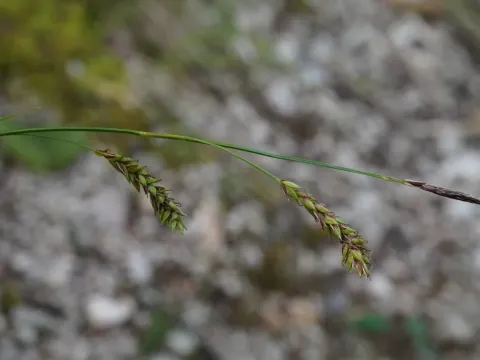
Short-spike sedge
Carex brachystachys
Short-spike sedge (Carex brachystachys) belongs to the Cyperaceae family. It is a perennial herbaceous plant naturally occurring in temperate and subalpine regions, typically favoring moist, cool habitats for its development.
What the section contains
Short-spike sedge
Botanically, the crop is distinguished by its short inflorescences, which give the plant its specific name. The stems are erect and node-bearing, supported by a well-developed root system that provides excellent winter hardiness and tolerance to temporary waterlogging.
The plant has moderate light requirements, though it thrives most productively in well-drained but sufficiently moist loamy soils. The optimal soil pH for this species ranges from slightly acidic to neutral, ensuring balanced nutrient uptake.
From an agrotechnical perspective, short-spike sedge is valued for its ability to form a dense turf, which helps in preventing soil erosion on sloped terrains. The crop exhibits high tolerance to freezing temperatures, making it suitable for cultivation in northern agricultural zones.
Its agricultural utility is primarily focused on the establishment of hay meadows and pastures in areas where cultivation of more heat-demanding grasses is limited. The biomass of this sedge provides satisfactory nutritional content, especially when harvested before reaching full maturity.