
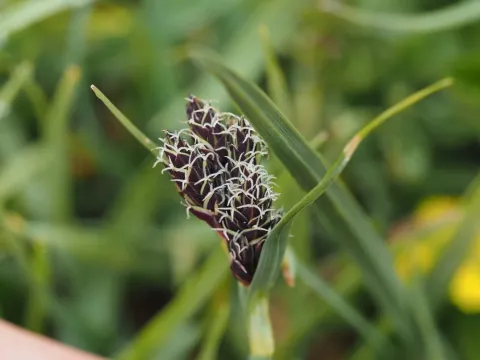
Small-flowered sedge
Carex parviflora
Small-flowered sedge (Carex parviflora) is a perennial herbaceous plant belonging to the Cyperaceae family. In agriculture, it serves as a critical component of natural forage lands, particularly in mountainous and alpine ecosystems where climate conditions are challenging for standard crops.
What the section contains
Small-flowered sedge
This species thrives in moist to well-drained soils and exhibits significant adaptability to varying soil compositions, including peat and loam. It is highly valued for its ability to grow in short growing seasons and tolerate low temperatures that would inhibit other vegetation.
The root system of the small-flowered sedge is well-developed, enabling it to stabilize soil and maintain a dense turf layer. This structural integrity is essential for preventing soil erosion in highland regions and maintaining the productivity of pastures.
Optimal growth requires consistent moisture and exposure to direct sunlight. The plant is inherently resilient and does not require complex fertilization programs, as it is well-adapted to the natural nutrient cycles of its native mountain habitats.
Due to its hardiness, it remains a reliable source of green biomass even in remote or high-altitude areas where industrial agricultural practices are not feasible or economically justifiable.
Small-flowered sedge is naturally resistant to many common fungal and bacterial diseases that often plague commercial grass crops. The primary risk factor is the occurrence of leaf rust, which can appear during exceptionally warm and humid seasons with poor air circulation.
Pest damage is generally low, as the plant possesses natural chemical deterrents within its leaf tissues. Occasional infestations by leaf-eating insects are typically self-limiting and do not warrant chemical intervention in natural meadows.
The most significant threat to the plant's health is the degradation of its habitat through overgrazing. Excessive mechanical pressure from livestock can destroy the dense turf, leading to soil exposure and the introduction of opportunistic weeds.
Management practices focus on sustainable grazing rotations to allow the root system to recover between usage periods. This promotes vigor and density, naturally suppressing potential competitive weeds and minimizing the need for manual maintenance.
By following proper management guidelines, farmers can maintain the health and longevity of sedge-dominated pastures without relying on pesticides or heavy chemical inputs.