
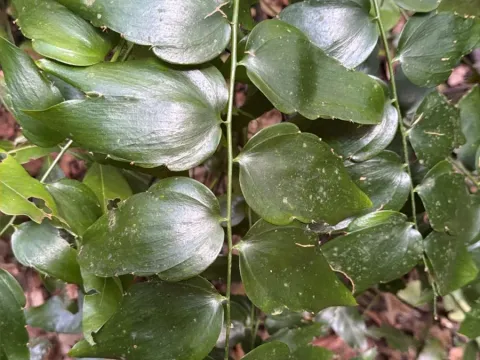
Semele androgyna
Semele androgyna
Semele androgyna, commonly known as climbing butcher's broom, is typically propagated through seed sowing or rhizome division. Fresh seeds should be sown in a well-draining, sterile potting mix to ensure high germination rates.
What the section contains
Semele androgyna
The ideal time for propagation is during the spring months, as the rising light levels support robust growth. Pre-soaking seeds in lukewarm water for several hours before planting can significantly reduce the dormancy period.
Rhizome division is a more efficient method for maintaining clonal traits. This should be performed during the plant's dormant phase, ensuring each division contains at least one active growing bud for successful establishment.
Young seedlings require protection from harsh sunlight and should be maintained in a warm, humid environment. Proper spacing during the initial growth stages is essential to prevent overcrowding and fungal issues.
Transplanting seedlings into individual pots should occur once they reach a sturdy size. Using a porous, nutrient-rich substrate is vital for developing a strong root system during these early stages.
This species thrives in partially shaded environments, mimicking its natural habitat in dense woodlands. Direct sunlight should be avoided, as it can scorch the specialized leaf-like structures, known as phylloclades.
Soil requirements focus on drainage and organic content. A mix of peat moss, pine bark, and coarse sand provides the necessary aeration while retaining sufficient moisture for the plant's health.
Environmental humidity is crucial for Semele androgyna; it requires consistent levels between 60-70 percent. In drier climates, regular misting or the use of a humidity tray is highly recommended.
Watering practices must be disciplined, allowing the top inch of soil to dry before the next hydration. Overwatering is the most frequent cause of root failure in this species, necessitating efficient drainage holes in all containers.
The plant prefers stable temperatures ranging from 15 to 25 degrees Celsius. While it can withstand cooler periods, frost protection is mandatory as the plant is not winter-hardy in temperate regions.
The primary economic value of Semele androgyna lies in its use as an ornamental climber for interior spaces and conservatories. Its arching stems and glossy phylloclades provide a striking vertical element.
In the floral industry, the long, durable stems of this plant are highly sought after as premium foliage. They offer exceptional vase life, making them popular for large-scale arrangements and event decor.
Productivity in terms of foliage growth is enhanced through balanced liquid fertilization during the active growing season. Nitrogen-rich feeds help stimulate the development of new, vibrant climbing stems.
Pruning is an essential maintenance task to manage plant size and improve structural integrity. Removing older, less productive stems redirects energy to new growth and enhances the overall visual appeal of the plant.
With correct care, the plant can reach significant heights, acting as a natural green screen. Its adaptability to various training systems makes it a versatile choice for modern biophilic design projects.
Root rot is the most serious threat to Semele androgyna, usually triggered by poor drainage or excessive watering. The symptoms often appear as localized wilting despite moist soil conditions.
Pests such as scale insects and spider mites are frequently problematic in indoor greenhouse environments. These pests reside on the underside of the phylloclades, drawing sap and weakening the plant's structural integrity.
Fungal leaf spots can occur when air circulation is inadequate or when foliage remains wet for extended periods. Improving ventilation and maintaining dry phylloclade surfaces is the most effective preventative measure.
Nutrient deficiencies, particularly chlorosis caused by iron or magnesium imbalance, can lead to yellowing of the stems. Targeted foliar feeding can quickly address these symptoms if caught in time.
Monitoring the plant for early signs of infestation is critical. Integrated pest management, including the use of neem oil or horticultural soaps, is recommended for controlling minor outbreaks before they become systemic.