
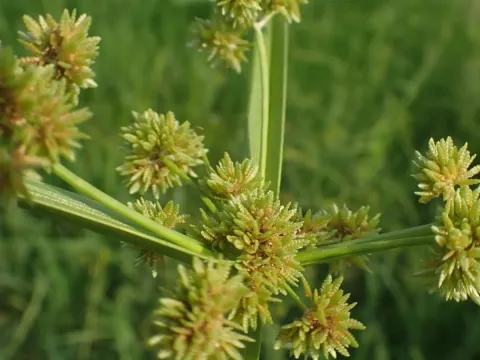
Smallflower umbrella sedge
Cyperus difformis
Smallflower umbrella sedge (Cyperus difformis) is an annual plant belonging to the Cyperaceae family. It is widely recognized as a serious weed in flooded rice cultivation across temperate and tropical regions worldwide due to its extreme adaptability to aquatic environments.
What the section contains
Smallflower umbrella sedge
Originating from warmer parts of the Old World, this species has successfully colonized irrigation systems in many countries. Its ability to thrive in flooded conditions stems from specialized aerenchyma tissue that allows oxygen transport to the roots in saturated soils.
The plant requires high levels of solar radiation and moisture for optimal growth. It generally germinates in water-saturated or flooded soils at temperatures ranging from 20°C to 35°C, which perfectly aligns with the growing conditions of lowland rice.
Botanically, Cyperus difformis is characterized by a tufted habit and small, spherical inflorescences that give it its specific name. It typically reaches a height of 10 to 60 centimeters depending on the availability of nutrients and the density of the surrounding vegetation.
Agricultural management relies on water level manipulation. Maintaining a consistent, deep flood can help suppress early emergence; however, once established, the plant becomes highly resistant to drowning and requires specific herbicide intervention for control.
The primary threat posed by this sedge is its capacity for rapid population expansion. A single plant is capable of producing thousands of tiny seeds, which can easily be dispersed through irrigation water and machinery, making it difficult to contain in rice-growing regions.
As an aquatic weed, it competes intensely with rice for nitrogen and light. Field studies indicate that significant infestations can reduce rice yields by up to 50% if left unmanaged during the critical first few weeks of the rice crop establishment.
The sedge acts as an alternative host for various rice pests, including stem borers and various leafhoppers, which can transmit viral diseases. This ecological role makes the plant a significant concern for integrated pest management programs in rice-growing areas.
Pathogens affecting the plant include several fungal species that cause leaf spot and stem rot. These infections may weaken the weed, but they also provide a persistent source of inoculum for potential crop-pathogenic fungi in the rice field environment.
Due to the development of herbicide resistance in several countries, growers are encouraged to use integrated weed management (IWM). This involves rotating herbicide modes of action, physical weeding where practical, and strict quarantine of agricultural equipment between sites.