
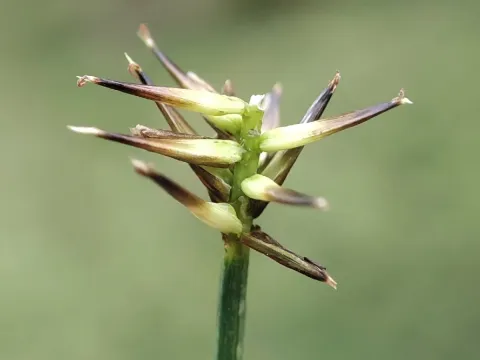
Small-bristle sedge
Carex microglochin
Small-bristle sedge (Carex microglochin) is a perennial herbaceous plant belonging to the Cyperaceae family. This species is native to arctic, subarctic, and alpine regions across the Northern Hemisphere, known for its resilience in harsh climates.
What the section contains
Small-bristle sedge
The plant features narrow, thread-like leaves and compact rhizomes, forming small, dense tufts. Its botanical identity is confirmed by its unique spikelet structure, where the perigynia possess distinct, bristle-like appendages, which serves as a key identifying trait.
It thrives in wet, saturated environments, specifically in fens, bogs, and along the margins of cold, arctic water bodies. The plant requires a stable moisture level throughout the growing season, showing high sensitivity to even temporary drought or soil dehydration.
Climatic requirements are specific to high-latitude and high-altitude areas. The small-bristle sedge is a true cryophyte, capable of enduring extreme cold during dormancy, while its active growth occurs during the brief, cool northern summer months.
In terms of agricultural or ecological utility, this sedge is primarily valued for its role in stabilizing wetland substrates. It is often studied as an indicator species for climate change impact monitoring in tundra ecosystems, as it reflects the health of permafrost-related water regimes.
The primary threat to the small-bristle sedge is habitat loss due to hydrological changes. As permafrost thaws, the specific moisture conditions required for its survival are frequently disrupted, leading to the local extinction of the species.
There are no major insect pests known to specifically attack this sedge in its natural habitat. However, pathogenic fungi that thrive in overly stagnant water may present a risk if environmental conditions deviate from the historical norm.
Competition from invasive or northward-migrating species poses a significant risk. As the climate warms, larger, more aggressive plants can outcompete the small-statured sedge, leading to reduced biodiversity in its native ranges.
Human activities, such as infrastructure development in arctic regions, lead to the physical destruction of the fragile peat mats where this plant anchors its roots. Recovery from such damage is extremely slow due to the short growing season.
- Preventing soil drainage in native wetlands.
- Monitoring potential fungal outbreaks in peat substrate.
- Limiting human foot traffic in sensitive tundra areas.