
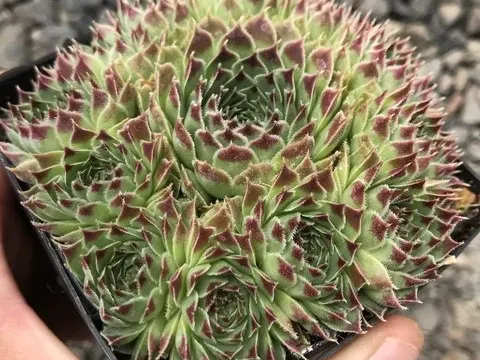
Sempervivum giuseppii
Sempervivum giuseppii
Sempervivum giuseppii is a succulent perennial plant belonging to the Crassulaceae family, native to the rugged terrains of the Pyrenees mountains. It is a highly specialized plant adapted to extreme alpine conditions.
What the section contains
Sempervivum giuseppii
The botanical structure consists of tight rosettes of thick, succulent leaves designed to store water efficiently during prolonged dry spells. This adaptation allows the plant to thrive in rocky soils where water availability is limited.
For optimal growth, this crop requires full sun exposure. In shaded environments, the plant loses its dense shape, its growth rate slows down, and it becomes more susceptible to environmental stressors.
Soil requirements focus on drainage rather than fertility. A grit-heavy substrate or a mixture of loam, sand, and gravel is essential to prevent water accumulation, which is the primary cause of root failure.
The climate requirements for Sempervivum giuseppii include high tolerance to cold and temperature fluctuations. It is a hardy species that does not require seasonal indoor protection in most temperate gardening zones.
The primary threat to the health of Sempervivum giuseppii is overwatering and poor soil drainage, which quickly leads to root rot and rot of the basal leaves. Maintaining a dry crown is essential.
Mealybugs are the most common pests that infest the rosettes. These insects hide between the dense leaves, making detection difficult; they can be managed with targeted insecticide sprays when found.
Fungal pathogens may emerge in environments with stagnant air or excessive humidity, leading to leaf spot diseases. Ensuring adequate spacing between individual rosettes is a key preventative measure.
Root aphids can also compromise the plant's health, feeding on the underground parts and causing the rosettes to lose their characteristic turgor and vitality.
Effective pest and disease management for this crop relies on preventative monitoring and creating an environment that mimics the plant's natural, well-ventilated, and fast-draining rocky habitat.