
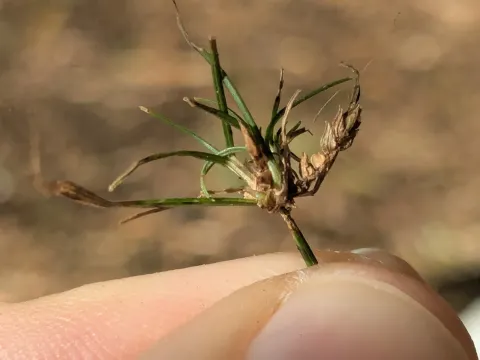
Slender umbrella sedge
Cyperus gracilis
Propagation of the slender umbrella sedge is primarily achieved through the division of mature root clumps during the active growth phase in early spring.
What the section contains
Slender umbrella sedge
For seed propagation, seeds should be sown on the surface of a moist, well-draining soil mix, as they require light exposure to trigger germination effectively.
Maintaining high humidity levels is crucial during the germination process; covering the containers with transparent film helps to simulate the required microclimate.
Seedlings need to be transplanted into individual pots once they have developed at least two or three true leaves to ensure they have adequate room for root development.
Early plant development requires protection from direct sunlight and consistent moisture levels to prevent the delicate seedlings from drying out prematurely.
Cyperus gracilis is a member of the Cyperaceae family, specifically adapted to wetlands, stream banks, and habitats with consistently waterlogged soil conditions.
The plant thrives in nutrient-rich, organic soil that is capable of retaining significant amounts of moisture without becoming compacted or anaerobic.
Bright, indirect light is essential for the plant to maintain its structural integrity; direct hot sun can scorch the foliage and cause permanent damage.
Water management is the most critical aspect of the plant's husbandry; it is recommended to keep the base of the pot sitting in a shallow water tray.
Temperatures should be kept consistently warm, ideally between 20°C and 25°C, to ensure steady growth and prevent the dormancy of the root system.
The primary physiological threat to the plant is fungal root rot, which typically occurs due to poor water drainage or stagnant conditions at low temperatures.
Common horticultural pests that affect this sedge include spider mites and mealybugs, which thrive in environments where air circulation is poor or humidity is low.
Integrated pest management, including regular inspection and the use of insecticidal soaps, is effective in keeping populations of pests under control.
To prevent disease, it is necessary to provide adequate ventilation around the plants, which reduces the condensation and moisture accumulation on the leaves.
- Regular inspection for signs of chlorosis or leaf tip browning.
- Pruning old or dead foliage to improve air circulation.
- Avoiding sudden temperature drops that weaken the plant's natural defense mechanisms.