
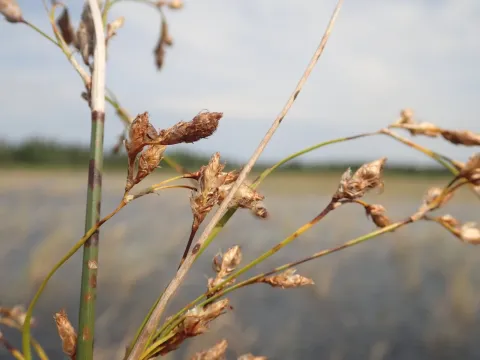
Slender bulrush
Scirpus heterochaetus
The slender bulrush (Scirpus heterochaetus) is a perennial herbaceous plant belonging to the Cyperaceae family. It is widely distributed across temperate regions of the Northern Hemisphere, where it typically colonizes the margins of lakes, ponds, and slow-moving streams.
What the section contains
Slender bulrush
Morphologically, this species is characterized by its slender, cylindrical, and nearly leafless stems that arise from a robust creeping rhizome. This subterranean system is crucial for the plant's survival and its ability to spread horizontally, effectively binding loose sediments in aquatic environments.
Regarding environmental requirements, this species thrives in wet, saturated soil conditions. It prefers fine-textured sediments, such as silt or muck, which provide both the necessary nutrients and the water retention required to support its rapid seasonal development.
Optimal growth occurs in full sun, as the species is intolerant of heavy shade. Maintaining stable water levels is vital, especially during the early stages of growth, as significant fluctuations in depth can negatively impact the establishment and overall vigor of the bulrush population.
In terms of ecological management, Scirpus heterochaetus is frequently utilized for phytoremediation. Due to its high absorption capacity, it helps in sequestering excess nitrogen and phosphorus, thereby improving the water quality of the wetlands it inhabits.
The primary threats to Scirpus heterochaetus are habitat degradation caused by drainage, dredging, and land reclamation projects which directly remove the essential aquatic zones needed for its survival.
Pathogenic threats include various fungal pathogens such as rusts and smuts, which flourish in stagnant, humid environments where air circulation is restricted, potentially leading to widespread foliage necrosis.
Insect pests, including aphids and stem-boring larvae, can cause significant damage to the plant tissue during the peak growing season, reducing the overall photosynthetic capacity of the bulrush stands.
Invasive species competition represents a significant challenge to the species. More aggressive macrophytes, such as common reed or cattails, can outcompete the slender bulrush for space and light resources in productive environments.
Effective management strategies require regular observation of stem health and water nutrient levels, as excessive chemical pollution or industrial waste discharge can lead to the decline of the plant colony.