
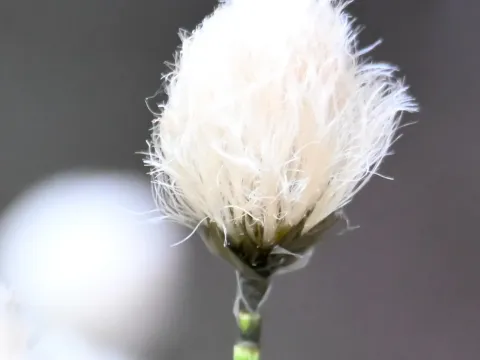
Short-anther cotton-grass
Eriophorum brachyantherum
Short-anther cotton-grass is a perennial herbaceous plant belonging to the Cyperaceae family. It is a distinctive species native to northern latitudes, adapted specifically to cold, wet, and nutrient-poor bog environments.
What the section contains
Short-anther cotton-grass
The plant features slender, grass-like leaves and produces delicate, fluffy white seed heads upon maturity. It typically grows in dense clumps, which serve as a critical component of peatland landscapes.
The species requires consistently high moisture levels and thrives in acidic soils, typically peat or bog substrates. It is extremely sensitive to changes in hydrology, particularly to any drop in the water table.
Its natural range encompasses arctic and boreal regions across the globe. It is highly resistant to freezing temperatures, which allows it to thrive in climates that would be lethal to most agricultural crops.
While not a traditional agricultural commodity, it holds significant ecological value for peatland restoration and carbon sequestration efforts within wet habitats.
The primary threat to this species is the disruption of its native habitat, primarily through drainage and land reclamation for agricultural or industrial use.
Because the plant is not cultivated in standard farming operations, there are no specific records of major agricultural pathogens affecting its health. Most risks are environmental rather than biological.
Insects that consume sedges can cause minor physical damage, but they rarely threaten the population stability of the species under natural conditions.
Competition from more aggressive, drought-tolerant species poses a threat when human intervention alters the chemical or moisture composition of the soil.
Effective conservation involves protecting wetland biodiversity and preventing the application of agricultural fertilizers, which can alter the delicate pH balance required by the plant.