
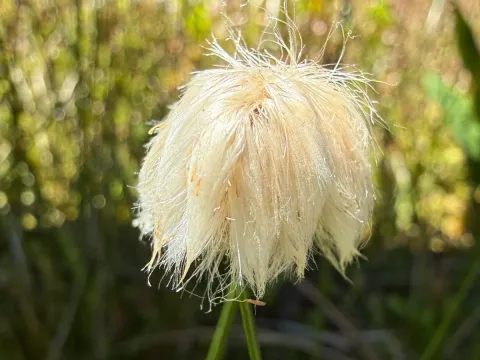
Chamisso's cottongrass
Eriophorum chamissonis
Chamisso's cottongrass (Eriophorum chamissonis) is a perennial herbaceous plant belonging to the Cyperaceae family. It is a moisture-loving species naturally occurring in northern habitats, including peatlands, marshes, and the margins of tundra ponds.
What the section contains
Chamisso's cottongrass
The plant is characterized by its linear foliage and unique inflorescences that develop into conspicuous, cotton-like bristles after flowering. These structures serve as both a protective mechanism for seeds and a means of dispersal by wind in open, wet environments.
Environmental requirements are strict: the species thrives in acidic, water-saturated soils. It is intolerant to drought, making consistent soil moisture or shallow standing water essential for successful cultivation. It performs best in full sun, where competition from woody plants is limited.
Climate adaptation is a hallmark of this species, as it is highly cold-hardy and capable of enduring severe frost. Its growth cycle is synchronized with the short northern growing season, necessitating rapid development once the ground thaws in the spring.
In terms of soil, it prefers organic-rich, peat-based substrates that mimic its native habitat. Proper site preparation involves maintaining the integrity of the soil structure to ensure that root systems remain saturated without stagnating completely.
The commercial and practical use of Chamisso's cottongrass is primarily focused on environmental restoration and water-feature landscaping. Its ability to stabilize riparian zones makes it a valuable tool in preventing soil erosion along embankments.
Beyond landscaping, the plant contributes to phytoremediation. Its dense root system and foliage help filter runoff, absorbing excess nutrients from water and improving the overall water quality in managed aquatic environments.
Harvesting seeds involves capturing the cotton-like tufts during the peak of the ripening stage. Because the seeds are tiny and attached to feathery bristles, they are extremely light and can be easily lost if not harvested under calm, dry weather conditions.
Storage of harvested material requires specific attention to humidity. Unlike many grain crops, these seeds are prone to rapid desiccation, which significantly reduces their viability; therefore, they should be stored in cool, controlled environments.
Ongoing maintenance of a cottongrass site is largely passive, requiring primarily the monitoring of water levels. Removing dead foliage after the growing season is a standard management practice to allow for vigorous regrowth and to maintain the aesthetic appeal of the planting site.