
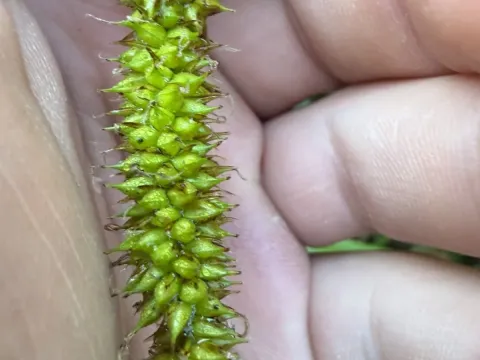
Carex utriculata
Carex utriculata
Carex utriculata, commonly known as the Northwest Territory sedge, is a perennial herbaceous plant belonging to the Cyperaceae family. It spreads extensively through robust rhizomes, forming dense, productive stands in moist habitats.
What the section contains
Carex utriculata
Seeding is typically conducted in late autumn to allow for natural cold stratification, which is necessary to break seed dormancy. Seeds should be sown directly onto wet, organic-rich substrates, ensuring they are slightly pressed into the mud but not buried too deep.
For nursery production, seeds are planted in trays under high-humidity conditions with shallow water levels. This controlled environment ensures a high germination rate and strong root development before transplanting into permanent field locations.
Optimal planting density ranges from 5 to 10 plants per square meter for reclamation projects. Higher densities lead to faster cover and better erosion control in damaged wetland areas, which is a primary reason for the plant's use in ecological restoration.
Careful site preparation is required to remove competing vegetation before establishing new stands. Ensuring the presence of standing water or saturated soil at the time of sowing significantly improves the success rate of the new sedge meadow.
This species is a true hydrophyte, perfectly adapted to environments with permanent or seasonal waterlogging. It thrives in low-lying boggy areas, pond margins, and wet meadows where soil remains saturated throughout the growing season.
The plant prefers acidic to neutral soils with high organic matter content. It is exceptionally tolerant of flooding, being able to persist in water depths of up to 30 centimeters for extended periods without oxygen deprivation in the root zone.
Temperature requirements for Carex utriculata are characteristic of northern temperate climates. It is highly winter-hardy and initiates rapid growth as soon as water temperatures rise in the spring, typically peaking in early summer.
Full sun is essential for high productivity and vigorous rhizome expansion. While it can survive in partial shade, the biomass yield and the density of the stand are significantly reduced compared to plants grown in open, sunlit habitats.
Soil aeration is facilitated by the plant's well-developed aerenchyma tissue. This specialized biological adaptation allows the species to survive in anaerobic soil conditions that would be lethal to most other agricultural crops.
The biomass yield of Carex utriculata is highly variable based on site productivity and nutrient availability. In well-managed wetland meadows, yields can reach 4 to 6 tonnes of dry matter per hectare under optimal conditions.
Fertilization is rarely applied in wetland settings due to environmental regulations. Instead, management focuses on water level control to optimize growth. Nitrogen inputs can boost yields but increase the risk of invasive species encroachment.
The forage quality of the sedge is considered moderate, making it useful as supplemental feed, particularly in late spring. It is often harvested for hay or silage, although the nutritional value drops rapidly as the plant matures and lignifies.
Beyond its use as animal feed, the harvested biomass is highly effective as animal bedding due to its superior moisture-wicking properties. This adds economic value to the crop, especially in livestock operations near wetland zones.
Technological advancements in amphibious harvesting equipment have made it possible to collect biomass efficiently from wetland sites. This equipment allows for minimal disruption to the soil structure, preserving the long-term health of the sedge stand.
Carex utriculata is generally robust and resistant to most agricultural diseases. Occasionally, rust fungi can develop on foliage during exceptionally humid summers, though these infections rarely result in significant economic damage to the crop.
Insect pests are typically balanced by natural predators in wetland ecosystems. Significant outbreaks are rare and usually limited to minor stem-boring insects, which do not warrant the use of chemical pesticides in sensitive wetland habitats.
The greatest threat to this crop is the alteration of hydrology, specifically drainage of the site. When water levels drop significantly, the plant loses its competitive advantage and is quickly overtaken by faster-growing upland grasses.
Invasive wetland species, such as reed canary grass or cattails, can outcompete the sedge if the site is not monitored. Regular vegetation management and maintenance of proper water levels are critical to keeping the sedge stand healthy and productive.
Over-harvesting can weaken the rhizomes and reduce the density of the stand for subsequent years. Implementing a rotational harvesting schedule is necessary to allow for the replenishment of root carbohydrate reserves between cuts.
The optimal harvest window is during the early flowering phase, before seed set. This ensures the best balance between biomass quantity and nutritional quality, making the fodder more palatable for livestock.
Drying the sedge for hay is a labor-intensive process due to the high moisture content of the plant and the damp environment. Efficient sun-curing with frequent turning or the use of mechanical dryers is required to prevent mold formation.
Seed harvesting should be performed when the spikes turn light brown and begin to disperse. Collecting seeds at the right maturity stage is crucial, as unripe seeds have low viability and will result in poor germination rates the following year.
For industrial applications like biofuel or fiber production, harvesting is shifted to late autumn. At this point, the plants are drier and have lower nutrient content, which makes the material better suited for thermal processing or paper manufacturing.
After harvest, maintaining a stubble height of at least 15 centimeters is important for the survival of the rhizomes. This practice protects the plant from frost damage during the winter and encourages uniform regrowth in the spring.