
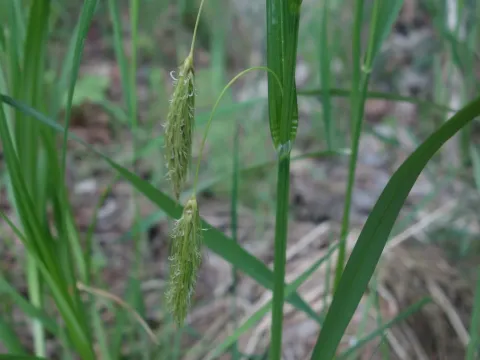
Chaffy sedge
Carex paleacea
Chaffy sedge (Carex paleacea) is a perennial herbaceous plant belonging to the Cyperaceae family. It is a highly specialized species adapted to harsh coastal environments and brackish wetlands.
What the section contains
Chaffy sedge
This crop thrives in periodically flooded soils, demonstrating exceptional tolerance to high salinity levels that would be fatal to most traditional agricultural plants.
The plant requires cool to temperate climates, showing high resilience to cold winters and fluctuations in moisture levels common in Northern maritime zones.
Botanically, it is a rhizomatous species. Its underground structure is designed for aggressive propagation, which creates a dense mat of roots that helps prevent shoreline erosion.
Cultivation requirements involve maintaining the specific hydrologic conditions of the salt marshes where it naturally occurs, as the plant depends on the constant interaction with saline groundwater.
In terms of agricultural utility, chaffy sedge is mainly utilized as a supplementary forage source for livestock in remote northern regions where other crops cannot be grown.
The biomass yield varies significantly depending on the site's salinity and the duration of seasonal flooding, but it generally produces a stable quantity of roughage.
Nutritional value analysis shows that while it is not a primary grain crop, it contributes essential fiber when managed in natural meadow settings.
Beyond forage, the yield of this plant is measured in its effectiveness for phytoremediation and soil stabilization projects in sensitive coastal areas.
Proper management of harvest cycles is crucial to ensure the persistence of the plant colonies while obtaining the necessary amount of biomass for local agricultural needs.
Chaffy sedge is remarkably resistant to typical agricultural pests and pathogens, thanks to its specialized evolutionary adaptation to salty environments.
The primary threat to its survival is the alteration of coastal hydrology, such as drainage or extreme changes in salinity due to human land development.
Invasive species present a competitive challenge, particularly if the natural balance of the marsh ecosystem is disrupted by human activities or climate shifts.
While disease outbreaks are rare, excessive moisture fluctuations can stress the plant, making it more susceptible to localized fungal infections.
Mechanical damage to the rhizomes caused by heavy machinery or overgrazing can significantly impact the long-term health and cover of the sedge stands.