
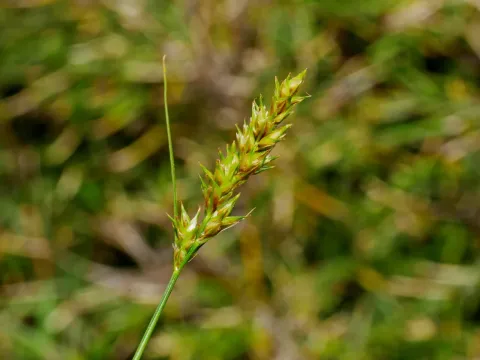
Cloud sedge
Carex nubigena
Cloud sedge (Carex nubigena) is a perennial herbaceous plant belonging to the Cyperaceae family. It is native to the high-altitude regions of Asia, specifically the Himalayas, where it has evolved to thrive in harsh, high-mountain environments.
What the section contains
Cloud sedge
Botanically, this species is characterized by dense, tufted growth habits. It features narrow, dark green leaves that are quite rigid, which helps the plant survive high winds and cold temperatures typical of its natural habitat in the mountain zones.
The plant has specific requirements for environmental conditions. It prefers cool climates and is exceptionally hardy, capable of surviving harsh winter conditions. Exposure to full sunlight or partial shade is ideal for its development.
Soil requirements are moderate. Carex nubigena favors well-drained, slightly acidic, and moist soils. It is particularly efficient at colonizing rocky or nutrient-poor substrates, which makes it a valuable asset for ecosystem restoration projects.
Agricultural management is relatively simple compared to cereal crops. Since it is a wild-origin species, it requires little fertilization and relies on its dense root system to outcompete weeds in the surrounding area.
The primary economic use of cloud sedge lies in soil bioengineering and erosion control. Its dense root system binds soil particles effectively, making it an excellent choice for stabilizing steep slopes and preventing soil degradation.
While not a primary forage crop, cloud sedge can contribute to mountain pasture biomass. However, because its leaves become tough and rich in silica as the plant matures, it is only palatable to livestock in the early vegetative stages.
In landscaping, this species is appreciated for its architectural form. It is frequently incorporated into alpine gardens and naturalistic meadow plantings, where it provides an aesthetic texture that persists throughout the growing season.
Harvesting for seed production is best done in late summer when the spikes turn brown. It is crucial to monitor the maturity carefully, as the seeds of Carex species can shatter and disperse easily if harvest is delayed.
Maintenance of cloud sedge plantings includes occasional thinning to prevent the center of the clumps from dying out. Regular maintenance ensures the longevity of the stand and promotes healthy, vigorous growth in subsequent seasons.