
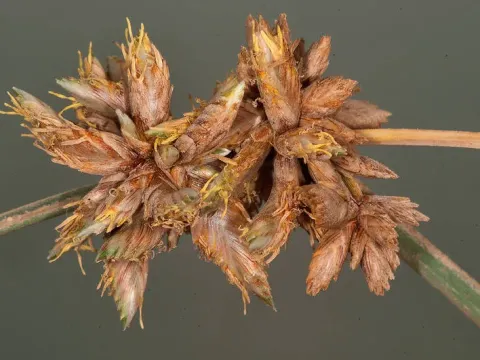
Clustered club-rush
Scirpus conglomeratus
Clustered club-rush is a perennial herbaceous plant that reproduces primarily through seeds or the expansion of its rhizome system. In its natural habitat, seeds germinate on moist substrates when temperatures consistently exceed 15 degrees Celsius.
What the section contains
Clustered club-rush
For cultivation purposes, seeds should be sown on the surface of a damp substrate. They require light to germinate, so burying the seeds too deeply will prevent successful emergence. Spring is the optimal time for establishing new plots.
Pre-chilling seeds at temperatures between 0 and 5 degrees Celsius for approximately two months can significantly improve germination rates. This stratification process helps break seed dormancy and ensures a more uniform crop.
A planting density of about 30 to 40 centimeters between plants is recommended. This spacing provides enough room for the rhizomes to expand while preventing overcrowding, which could lead to competition for nutrients and space.
Once seedlings emerge, maintaining constant moisture levels is crucial. The young plants are highly sensitive to drought, and drying out the growing medium during the first few weeks can result in total plant loss.
Belonging to the Cyperaceae family, this species is a true hydrophyte. It thrives in wetlands, pond margins, and areas with consistently high water tables, reflecting its evolved adaptation to aquatic environments.
The plant prefers nutrient-rich, silty, or peaty soils. It is capable of growing in neutral to slightly acidic conditions and is frequently utilized in ecological engineering due to its efficiency in nutrient uptake from water.
Clustered club-rush is adapted to temperate climates and demonstrates good cold tolerance. However, it requires significant sun exposure to achieve maximum growth rates and biomass production; shaded areas will result in weaker plants.
The stability of the water level is a key factor. While it can handle periodic flooding, total desiccation of the roots will cause growth arrest. It is essential to ensure that the site does not dry out completely during the peak of summer.
Due to its biological nature, the plant does not require high levels of synthetic fertilizers. It derives most of its required nutrients from bottom sediments and dissolved organic matter in the water, making it a low-input crop.
The economic value of this crop is primarily found in its biomass, which can be harvested for industrial purposes such as livestock bedding, handicraft weaving, or as an organic mulch for agricultural fields.
Yield varies based on soil richness and water quality. On well-managed wetland sites, the plant can produce significant annual biomass, with the potential for multiple harvests if the conditions are optimal throughout the season.
Beyond traditional use, the plant is a candidate for bioenergy. The dried stalks have a high energy density, and when processed correctly, they can serve as a sustainable biofuel source for rural heating systems.
For handicraft production, the harvest should be timed according to the maturity of the stalks. Harvesting when the stalks are firm but still green ensures they remain flexible enough for weaving after being dried properly.
The species also contributes to water purification. In agricultural drainage systems, the harvest of biomass removes excess nitrogen and phosphorus, effectively filtering the water before it reaches larger water bodies.
The primary threats to clustered club-rush include fungal diseases such as rust and leaf spot. These pathogens thrive in stagnant water with poor circulation, which encourages the spread of spores across the plantation.
Pests such as aphids can cause damage during warm periods, sucking sap from the tender parts of the plants. Severe infestations lead to stunted growth and reduced biomass quality, necessitating management strategies.
Maintaining proper spacing is the best preventive measure against disease. By ensuring adequate airflow between plants, the risk of moisture-related infections is greatly minimized.
Root rot can occur if the water becomes completely anaerobic or if there is excessive decomposition of old organic material in the substrate. Ensuring a gentle flow or turnover of water can mitigate these risks.
Chemical intervention is generally avoided due to the environmental sensitivity of the wetland habitats. Instead, practitioners focus on biological and mechanical controls to keep the population healthy and productive.
Harvesting is typically performed in late summer or early autumn. This timing aligns with the plant's growth cycle, ensuring that the stalks have reached maximum structural integrity and dry matter content.
Mechanical harvesting requires specialized equipment designed to operate on soft, saturated soils. Using the right machinery ensures the root system remains undisturbed, which is vital for the longevity of the perennial stand.
Once harvested, the biomass must be dried systematically. Spreading the stalks in thin, well-ventilated layers prevents mold and mildew growth, which is essential for maintaining the quality of the raw material.
When intended for fodder or bedding, the harvest should occur slightly earlier to capture higher protein content and ensure the material is softer and less abrasive for livestock usage.
After the harvest, leaving a healthy height of stubble helps the plant regenerate efficiently. This practice supports the plant's resilience, allowing it to return year after year without the need for reseeding the area.