
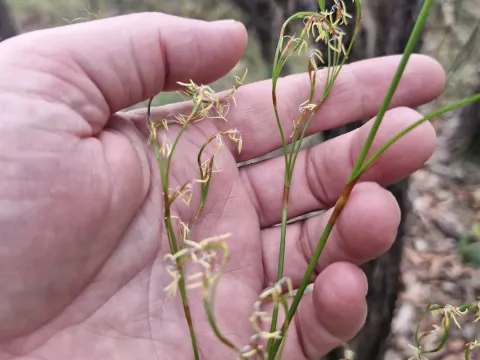
Caustis
Caustis
The genus Caustis belongs to the Cyperaceae family, comprising perennial grasses native primarily to Australia. These plants are known for their distinctively rigid, wire-like stems that often lack significant foliage, serving as an evolutionary adaptation to arid environments.
What the section contains


Caustis
Botanically, Caustis species exhibit specialized culms that allow for efficient photosynthesis with minimal water loss. Their root systems are often robust and rhizomatous, enabling the plants to persist in nutrient-poor, sandy, or rocky soils found in their native Australian scrublands and woodlands.
Climatic requirements for Caustis involve high light intensity and stable temperatures. While they are resilient, they generally thrive in well-drained habitats where water does not accumulate around the base, mirroring the porous soil structure of their indigenous regions.
In terms of agricultural or horticultural management, these plants are not considered typical crops. Their use is predominantly restricted to ornamental landscaping or native plant restoration projects, where they provide structural diversity and erosion control.
Soil management for Caustis should prioritize low-fertility substrates. Excessive fertilization can negatively affect the plants' natural structural integrity and growth habit, making them susceptible to lodging or weak stem development.
The most significant threat to Caustis cultivation is excessive moisture, which leads to rapid development of root rot pathogens. Proper site selection with superior drainage is the most effective preventative measure against these diseases.
Pests such as aphids and scale insects occasionally infest the stems, particularly under stress conditions or in poor ventilation environments. Early detection and targeted mechanical or mild biological control are recommended.
Fungal pathogens pose a constant risk when air circulation is poor or if the plants are kept in overly humid conditions. Symptoms include localized necrosis or discoloration at the stem bases, requiring immediate removal of affected tissue.
Weed control is essential during the establishment phase, as Caustis species grow relatively slowly compared to invasive ruderal vegetation. Mulching with inorganic materials can help minimize weed encroachment without raising soil moisture levels.
Overall, maintaining the health of Caustis relies on respecting the plant's adaptation to nutrient-depleted, high-drainage environments. Deviating from these natural parameters is the most common cause of failure in their maintenance.