
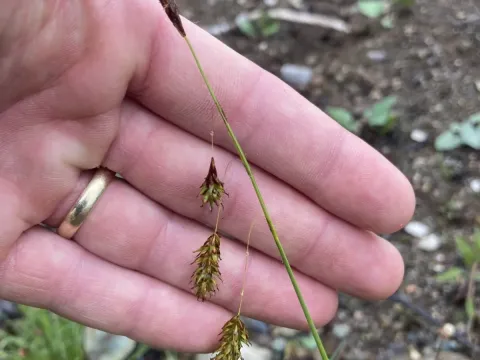
Chestnut sedge
Carex castanea
Chestnut sedge (Carex castanea) is a perennial herbaceous plant belonging to the Cyperaceae family. Originating from the temperate regions of North America, this species is typically found in moist woodlands, meadows, and along stream banks where consistent soil moisture is present.
What the section contains
Chestnut sedge
The plant requires acidic to neutral soils that are rich in organic matter. It thrives in sites with high water tables, as it is physiologically adapted to wetland conditions. Ensuring adequate moisture is the most critical factor for successful establishment.
Regarding climatic conditions, Carex castanea is highly adapted to cold and temperate climates. It demonstrates significant winter hardiness, allowing it to survive sub-zero temperatures reliably, provided that it is protected by consistent snow cover during the dormant period.
This species prefers partial shade to filtered sunlight. While it can survive in open areas, excessive heat and direct solar radiation often lead to leaf tip dieback and decreased vigor, thus positioning it as an ideal plant for forest edges or riparian strips.
Botanically, the plant is recognized by its dense tussocks and distinctive chestnut-brown terminal spikes. The narrow leaves provide a fine texture, while the root system is fibrous and aggressive enough to stabilize soils effectively in its natural habitat.
In agricultural practice, Chestnut sedge is not grown as a primary monoculture crop. However, it serves as an important component in native forage mixtures, especially on reclaimed wetlands or in areas where standard grasses fail to thrive due to excessive moisture.
The biomass production of this sedge is moderate compared to domestic forage grasses. It is often harvested incidentally as part of native hay in lowland meadows, providing additional bulk for livestock feed during periods of drought when upland pastures might be limited.
Beyond forage, the plant is valued for its soil-binding capabilities. It is frequently utilized in ecological restoration projects to stabilize pond edges and stream banks, where it reduces sediment runoff and prevents bank erosion.
Yield levels fluctuate significantly based on the hydrologic regime of the site. In saturated conditions, the plant can reach significant density, contributing to the overall carbon sequestration of the meadow ecosystem.
The nutritional profile of Carex castanea is best utilized by livestock during the early growth stages in spring. Once the plant reaches maturity and the inflorescences fully develop, the fiber content increases, making it less palatable for grazing animals compared to younger tissue.