
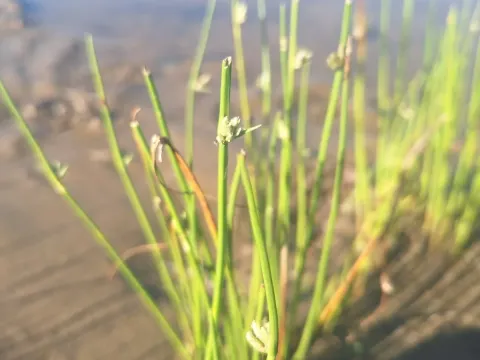
Smooth flatsedge
Cyperus laevigatus
Smooth flatsedge (Cyperus laevigatus) is a perennial herbaceous plant belonging to the Cyperaceae family. It is widely recognized for its adaptation to saline environments and wetlands, making it a unique species within its taxonomic group.
What the section contains
Smooth flatsedge
The plant thrives in subtropical and tropical regions, showing a strong preference for moist, sandy soils along watercourses. Its high salinity tolerance allows it to colonize areas where other common crops would fail to survive due to osmotic stress.
Botanically, it is characterized by rigid, cylindrical stems that can reach up to 80 centimeters in length. The root system is stoloniferous, enabling the plant to spread rapidly and form dense stands that contribute to soil stability in coastal areas.
Environmental requirements include abundant light and consistent moisture levels. While it is naturally found in marshes, it responds well to management practices that involve controlled water levels, which ensure optimal growth rates and biomass production.
In terms of agricultural and industrial use, the culms are harvested for weaving materials, traditional craft production, and animal fodder. Furthermore, it serves as a critical plant for environmental conservation, particularly in controlling soil erosion in saline wetlands.
Common diseases affecting this species involve fungal pathogens that flourish in dense, unventilated canopy layers. Proper spacing and site drainage are the primary management tools to prevent the spread of fungal spores and ensure plant health.
Pest issues are generally limited to specific insects that target sedge-like plants, such as borers or foliage-eating larvae. Integrated pest management strategies, focusing on habitat maintenance, remain the most effective approach for sustaining healthy crops.