
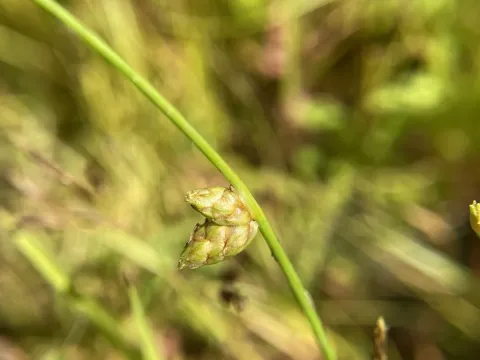
Smith's bulrush
Scirpus smithii
Smith's bulrush (Scirpus smithii) is a perennial herbaceous plant belonging to the Cyperaceae family. It is a highly specialized hydrophyte, adapted to life in saturated, muddy habitats typical of riparian zones and wetlands.
What the section contains
Smith's bulrush
The native range of this species is primarily within North America, where it thrives in muddy banks and tidal marshes. The plant requires nutrient-rich soils with high moisture retention capacity to maintain vigorous growth throughout the season.
Botanically, the plant is characterized by relatively short stems and a dense root system. The leaves are often reduced, meaning that the stems take on the primary responsibility for photosynthesis, giving the plant its distinct appearance.
Cultivation requirements include full sun exposure and a stable hydrological regime. While it tolerates various light conditions, growth rates are significantly improved in open areas where sunlight is not restricted by overhanging vegetation.
Beyond its botanical interest, this species is valuable for environmental engineering, specifically for shore stabilization and phytoremediation. Its ability to absorb nutrients makes it useful for managing runoff in constructed wetlands.
The primary threat to the health of Smith's bulrush is the onset of fungal root pathogens. These typically manifest when the water stagnates for extended periods, leading to anoxic soil conditions that stress the root system.
Insect pests, including various species of weevils and leaf beetles, pose a chronic threat to the foliage. If left unchecked, these insects can cause significant reduction in the biomass of a cultivated stand, impacting the plant's structural integrity.
Invasive weed competition is a significant concern for managed populations. Species such as cattails (Typha spp.) can quickly outcompete Smith's bulrush for space and light, requiring manual intervention to preserve the target crop.
Extreme fluctuations in water levels can be detrimental to young stands. A sudden drop in water level can dehydrate the root system, while sudden flooding may bury emerging shoots, causing mechanical stress to the crop.
Integrated pest management strategies are recommended when cultivating this species. Due to its role in water purification, the use of chemical pesticides must be avoided to prevent contamination of the surrounding ecosystem.