
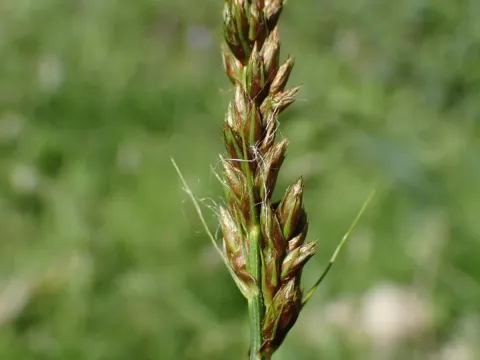
False fox sedge
Carex otrubae
Carex otrubae, commonly known as false fox sedge, is a perennial herbaceous plant belonging to the Cyperaceae family. It typically grows in dense tufts and is characterized by its robust root system, which plays a vital role in soil stabilization in wetland habitats.
What the section contains
False fox sedge
The native distribution of this species spans Europe, Western Asia, and North Africa. It is commonly found in riparian zones, damp meadows, and marshy grasslands, thriving in environments where water tables remain relatively high throughout the growing season.
This crop requires fertile, moisture-retentive soils to reach its full potential. While it favors full sun exposure, it demonstrates significant adaptability to partial shade. The species is highly valued for its tolerance to seasonal waterlogging, making it an excellent candidate for wet site restoration.
Morphologically, Carex otrubae is distinguished by its sharp, triangular stems and stiff, bright green leaves. The inflorescence consists of a dense, spiky cluster of brownish flower heads that provide a distinct aesthetic profile suitable for naturalistic garden designs.
Economically, the plant is widely utilized in bio-filtration systems and as a component of sustainable drainage schemes. Its ability to extract nutrients and improve water quality makes it a staple in ecological engineering projects, while its ornamental utility remains popular in pond landscaping.
Fungal infections, particularly rust diseases, are the primary concern for Carex otrubae when humidity levels are excessively high. Ensuring adequate spacing between individual plants is essential to promote airflow and mitigate the risks associated with fungal pathogens.
Pests, such as aphids or leaf miners, can occasionally impact the plant's health. While usually not fatal, infestations should be monitored and managed early to maintain the plant's vigor and ornamental appearance throughout the peak growing season.
Competition from invasive weeds poses a significant threat during the establishment phase. Proper site preparation and early-stage weeding are crucial to ensure that the sedge develops a dense, competitive root structure that effectively suppresses unwanted vegetation.
Improper fertilization practices can negatively influence the plant's natural balance. Excess nitrogen encourages lush growth that may succumb to physical damage or pathogen attacks, so balanced, slow-release nutrition is recommended for long-term health.
Environmental stress, such as extreme winter temperature fluctuations without sufficient snow cover, may harm the crown of the plant. Applying light organic mulch can provide the necessary insulation to protect the roots from damage during harsh cold snaps.