
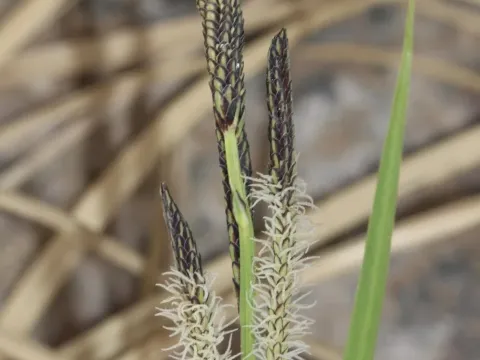
Emory's sedge
Carex emoryi
Emory's sedge, known scientifically as Carex emoryi, is a robust perennial grass-like plant belonging to the Cyperaceae family, native to North America.
What the section contains
Emory's sedge
It is primarily found in wetland habitats, such as riverbanks, marshes, and periodically flooded meadows, where it thrives in hydric soil conditions.
The plant is characterized by its rhizomatous growth habit, which allows it to form dense, mat-like colonies that are highly effective at soil stabilization.
In terms of light exposure, this species requires full sun to partial shade, showing its best development when light intensity is high during the growing season.
Soil requirements are relatively broad, provided the medium stays consistently moist; however, it prefers silty or clay-rich soils typical of floodplain areas.
Emory's sedge is generally resistant to major agricultural pests and diseases, making it a low-maintenance species for wetland restoration projects.
However, under conditions of poor air circulation and excessive humidity, it may occasionally suffer from foliar fungal issues such as rust or leaf spot.
Minor damage from herbivorous insects, including certain larvae and aphids, is possible but rarely reaches a threshold requiring chemical control.
The most significant threat to its vigor is severe drought, which compromises the root system and reduces the plant's ability to compete with invasive species.
Management practices should focus on maintaining adequate water levels and ensuring that the site is not subjected to prolonged dry periods during peak growth.