
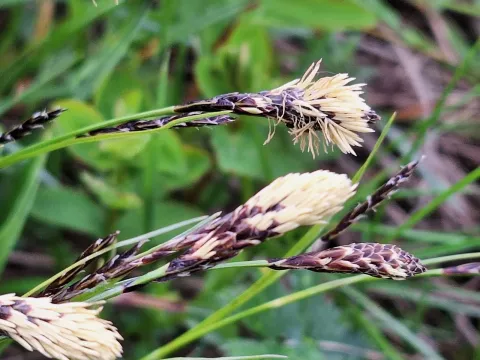
Evergreen sedge
Carex sempervirens
Evergreen sedge (Carex sempervirens) is a perennial herbaceous plant belonging to the Cyperaceae family. It is native to the mountainous regions of Central and Southern Europe, adapted to high-altitude alpine conditions.
What the section contains
Evergreen sedge
The plant thrives in well-drained, calcareous soils and prefers full sun to partial shade. Its natural habitat is characterized by rocky, nutrient-poor substrates, which the plant successfully utilizes for its dense growth habit.
This species is highly valued in horticulture for its evergreen foliage that maintains its color throughout the year. It exhibits excellent winter hardiness and wind tolerance, making it a reliable choice for exposed garden locations.
Cultural requirements are minimal, as the plant does not demand intensive fertilization. Providing proper drainage is the most critical factor, as stagnant water is detrimental to its root system.
In landscaping, it is used for rock gardens, borders, and as a ground cover in xeriscaping projects. Its tufted growth habit and elegant, arching leaves add structural interest to any planting scheme.
The primary threat to the health of evergreen sedge is excessive moisture, especially in poorly drained clay soils. This leads to root rot, which is often fatal if not addressed through environmental management.
Pests are generally uncommon, though in poorly ventilated or excessively humid conditions, aphids may occasionally inhabit the foliage. Regular inspection is advised to keep populations under control.
Fungal leaf spot diseases can occur during periods of prolonged wet weather. Improving air circulation by keeping appropriate spacing between individual plants is the best preventative strategy.
Competition from weeds is a significant factor during the establishment phase. Mulching or manual weeding is recommended until the sedge forms a sufficiently dense clump to suppress weed growth.
If symptoms of disease persist, removing the affected foliage or applying a targeted fungicide is necessary to prevent the spread of infection within the garden patch.