
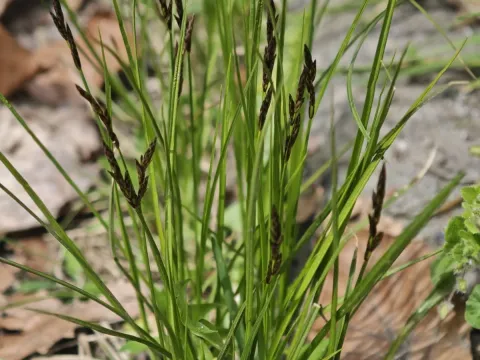
Early sedge
Carex praecox
Early sedge (Carex praecox) is a member of the Cyperaceae family. It is a perennial herbaceous plant characterized by its creeping rhizomes, which allow it to spread across sandy and dry habitats.
What the section contains
Early sedge
This species is native to a broad range of regions across Europe and Western Siberia. It typically colonizes dry meadows, sandy open spaces, and pine forest clearings, demonstrating high adaptability to drought-prone environments.
The plant thrives in well-drained, nutrient-poor, sandy or loamy soils. It has a high tolerance for alkaline or slightly acidic pH levels but is intolerant of waterlogged areas where root aeration is restricted.
Climate requirements include a preference for open, sunny environments where the plant can start its growth cycle early in the spring. Its resilience to low temperatures makes it a permanent fixture in temperate grassland ecosystems.
In agricultural practice, early sedge is utilized primarily for soil stabilization on fragile, erosion-prone sites. While not a primary forage crop, it provides a consistent, albeit modest, vegetation cover in grazing areas.
The primary diseases affecting Carex praecox are various types of smut (Ustilago), which specifically target the reproductive structures and diminish natural seed production.
Rust fungi can also impact the leaf tissue during periods of high humidity. While usually not lethal to the plant, severe infestations can significantly reduce the nutritional quality of the foliage.
Insect pests, including leaf-mining larvae and stem-boring insects, can cause mechanical damage. In some cases, localized populations of insects may affect the density of the sedge stands.
Agricultural management should focus on maintaining a balanced grazing schedule to prevent overgrazing, which could weaken the rhizome network and make the stand vulnerable to weed invasion.
Preventative measures for disease control focus on site selection and ensuring proper drainage, as these factors significantly influence the development of fungal pathogens within the sedge population.