
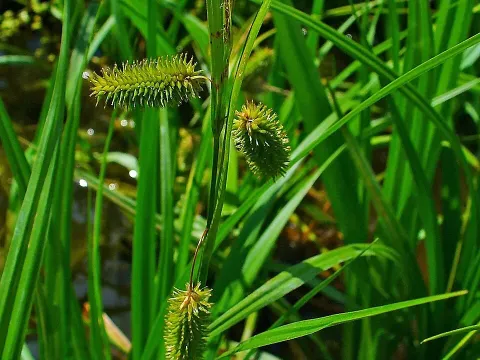
False sedge
Carex notha
False sedge (Carex notha) is a perennial herbaceous plant belonging to the Cyperaceae family. It is recognized for its robust rhizomatous root system that creates dense tussocks, which are highly effective in soil stabilization and preventing erosion in wetland environments.
What the section contains
False sedge
Native to wet meadows, marshes, and riparian zones, this plant thrives in conditions that are typically too moist for most standard agricultural crops. It shows a remarkable adaptation to waterlogged soils and high humidity, making it a valuable candidate for land reclamation.
The optimal conditions for Carex notha include peat-rich or clay-based soils with a slightly acidic pH. The plant is highly resilient and capable of enduring significant seasonal fluctuations in groundwater levels, as well as prolonged periods of cool, overcast weather.
Being a cold-hardy species, the false sedge can withstand harsh winters without substantial loss of vigor. The growing cycle commences early in the spring, allowing the plant to maximize biomass production throughout the main vegetative season.
Agricultural management of this species involves monitoring weed competition during the establishment phase. Once the stand is established, the plant becomes highly competitive due to its dense growth habit, requiring little additional maintenance to persist in the target habitat.