
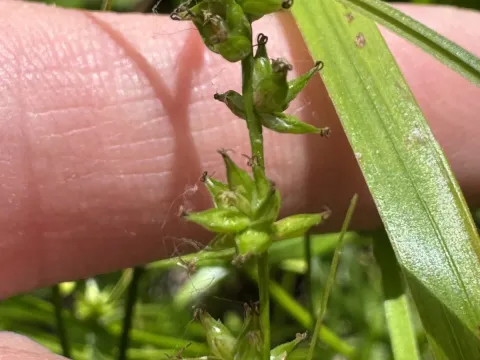
Eastern star sedge
Carex radiata
Eastern star sedge (Carex radiata) belongs to the Cyperaceae family. It is a perennial herbaceous plant native to North American woodland environments, where it grows in clusters.
What the section contains
Eastern star sedge
This species thrives in moist, well-drained soils and prefers partial to full shade conditions. It is highly valued for its ability to grow in the understory where light levels are limited.
The plant features fine, grass-like leaves forming dense, attractive clumps that reach a height of approximately 30 to 40 centimeters, fitting well into formal or informal landscape designs.
Regarding climate, Carex radiata is quite hardy, showing excellent tolerance to cold temperatures and adapting to various temperate conditions throughout the growing season.
In terms of practical use, it is primarily employed in sustainable landscaping and naturalistic gardening as a groundcover, contributing to soil stability and local biodiversity.
The primary threats to Carex radiata are fungal pathogens, specifically those causing leaf spots or root rot, which are often triggered by waterlogged soil and high humidity.
Insects, including various leaf-eating larvae and mites, may occasionally affect the foliage, although the species is generally resilient to most common garden pests.
To prevent disease outbreaks, it is crucial to ensure adequate drainage and avoid planting in areas with stagnant water, which compromises the root health of the sedge.
Competition from invasive plant species can hinder the establishment of Eastern star sedge, necessitating careful site preparation and regular maintenance during the early growth stages.
Sanitation practices, such as clearing debris and removing visibly diseased parts of the plant, are essential to maintain the health and vigor of established populations.