
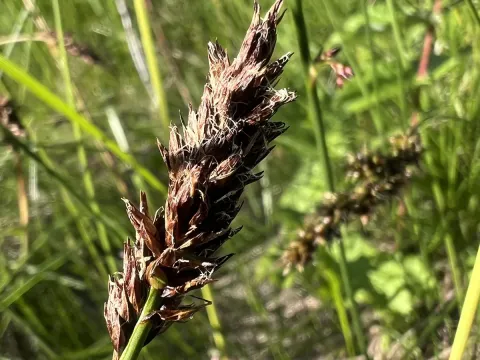
Fibrous tussock-sedge
Carex appropinquata
The fibrous tussock-sedge (Carex appropinquata) is a perennial herbaceous plant belonging to the Cyperaceae family. It is distinct for its dense, tussock-forming growth habit, which is a characteristic feature of this species.
What the section contains
Fibrous tussock-sedge
Native to Europe and parts of Western Asia, this species typically thrives in fens, bogs, and marshes. It prefers environments with a steady supply of moisture, reflecting its evolution in wet, mineral-rich habitats.
The plant demonstrates a high tolerance for waterlogged conditions, making it an ideal candidate for soil stabilization in wetlands. However, it requires well-aerated conditions at the root level to maximize biomass production throughout the season.
Soil preferences lean towards peat-based or gleyic soils with neutral to slightly acidic pH levels. Adequate nutrient availability, particularly nitrogen and phosphorus, is essential for maintaining the health of the sedge tussocks.
In terms of agricultural and ecological use, Carex appropinquata is valued for its ability to bind soil, reducing erosion in riparian zones and poorly drained agricultural land where other crops may fail to survive.
Smut fungi represent one of the primary pathological threats, specifically targeting the inflorescences and leading to reduced seed production and overall plant vigor.
Foliar diseases, such as leaf spots caused by various fungal pathogens, can manifest during prolonged periods of high humidity and heat, impacting the photosynthetic capacity of the plants.
Insect pests, including various species of weevils and stem-boring larvae, can damage the vegetative parts, creating entry points for secondary infections or weakening the structural integrity of the tussock.
Managing the plant density and ensuring proper drainage of the area can mitigate the risks associated with rot-inducing pathogens that affect the base of the stems.
Implementation of regular, periodic harvesting or controlled grazing serves as an effective management strategy to prevent the buildup of pathogens and maintain a healthy, vigorous population.