
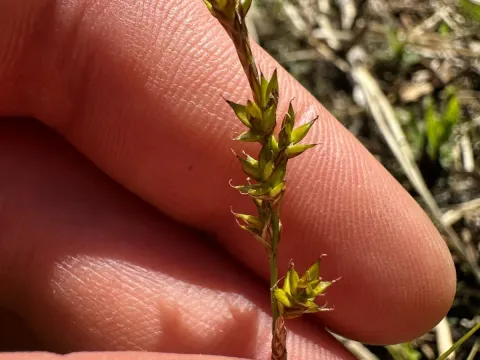
Elongated sedge
Carex elongata
Elongated sedge (Carex elongata) is a perennial herbaceous plant belonging to the Cyperaceae family. It is known for its dense tussock-forming growth habit, which allows it to thrive in wet and waterlogged conditions across its natural range.
What the section contains
Elongated sedge
The plant is widely distributed across the forest zones of Europe and Western Siberia. Its natural habitat includes damp alder forests, lake shores, and the edges of eutrophic fens, where soil moisture remains consistently high throughout the year.
Requirements for growth center on high moisture availability and sufficient mineral supply from groundwater. Carex elongata is particularly adapted to nutrient-rich wetland environments that support vigorous growth during the spring and summer months.
Botanically, the species is distinguished by its elongated, loose spikes arranged in a narrow inflorescence. The culms, or stems, typically reach heights between 30 and 70 centimeters and possess distinct, rough-edged profiles.
In terms of land use, this species is not cultivated as an agricultural crop. Instead, it is valued primarily for its ecological contributions, such as stabilizing saturated soil and providing essential habitat for specialized wetland fauna.
Carex elongata displays high natural resistance to most agricultural pests and diseases due to the specific acidity and moisture levels of its native environment. However, changes in environmental quality can increase its susceptibility.
Fungal infections, such as rust fungi, can occur during periods of prolonged stagnant air and high humidity, affecting the leaves and overall vigor of the tussocks. This is rarely a fatal condition but can inhibit reproductive success.
Insect herbivory is generally limited to species specialized in feeding on sedges. While occasional damage to foliage occurs, it rarely reaches levels that threaten the stability of a healthy population.
The primary threat to this plant is drainage and land reclamation. Reducing the water table leads to the rapid loss of the niche required by the elongated sedge, resulting in the invasion of more competitive, non-wetland species.
Excessive pollution or nutrient loading from adjacent agricultural runoff can also disrupt the delicate chemical balance of its habitat, leading to decreased resilience against local stressors.