
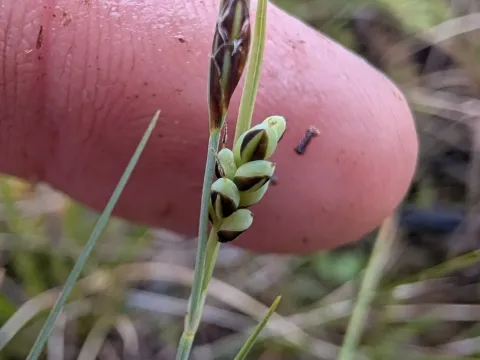
Livid sedge
Carex livida
Livid sedge (Carex livida) is a perennial herbaceous plant belonging to the Cyperaceae family. It is a highly specialized species that thrives in wetland environments, particularly in bogs and fens characterized by acidic and nutrient-poor substrates.
What the section contains
Livid sedge
The distribution of this species spans northern latitudes of the Northern Hemisphere, showing a preference for cool, humid climates. It is typically found in oligo-trophic wetlands where it forms small colonies, often associated with moss carpets and other moisture-loving vegetation.
Botanically, Carex livida is distinguished by its unique glaucous or bluish-green leaves, which provide a contrast against the brownish hues of many other bog plants. Its growth habit involves short rhizomes that help stabilize the plant in saturated soils.
The plant requires consistently high water levels throughout the growing season to maintain physiological functions. It possesses specialized adaptations to tolerate low nutrient availability and high levels of soil acidity that would be toxic to most agricultural crops.
Understanding the biology of this species is essential for wetland management, as it serves as a sensitive indicator of hydrological health. Its presence often signifies that a bog ecosystem is undisturbed and maintaining its natural function.
The primary threat to the stability of Livid sedge populations is the drainage of wetlands for land development or peat extraction. Changes in the water table level can rapidly lead to the local extinction of this moisture-dependent species.
Like many other sedges, it is susceptible to various rust fungi and pathogens that thrive in high humidity. These infections can be particularly devastating if the plant is already stressed by environmental changes.
Insect pests, such as lepidopteran larvae specialized in feeding on Cyperaceae, can impact the vigor of the colonies. In some areas, overgrazing by wild or domestic herbivores poses a risk by damaging the delicate rhizomatous root system.
Eutrophication from agricultural runoff is another major concern, as the introduction of excess nitrogen and phosphorus shifts the balance of the bog ecosystem, allowing faster-growing invasive species to outcompete the slower-growing Livid sedge.
Conservation strategies must prioritize the preservation of pristine bog hydrology and buffer zones to protect the species from chemical pollution and physical disturbance, ensuring the survival of this delicate wetland plant.