
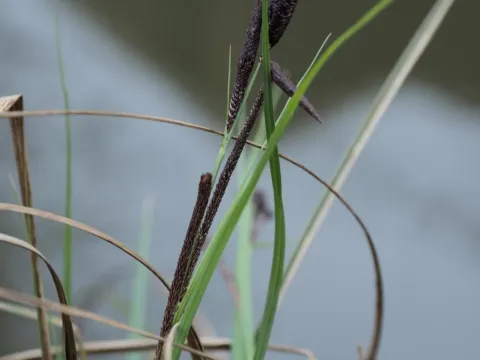
Lesser pond-sedge
Carex acutiformis
Carex acutiformis, commonly known as lesser pond-sedge, is a perennial plant of the Cyperaceae family, characterized by a robust creeping rhizome system.
What the section contains
Lesser pond-sedge
Cultivation is primarily achieved through vegetative propagation, specifically by dividing mature clumps during the early spring before the start of the main growth phase.
Proper site selection is crucial; the plant should be established in areas with permanently moist or saturated soil to ensure quick and successful rooting.
When planting, spacing should be carefully managed to allow for the natural spread of the rhizomes, which will eventually form a dense, uniform stand.
In restoration projects, planting density is often adjusted based on the specific hydroperiod of the wetland to prevent erosion and promote soil stabilization.
Lesser pond-sedge is a true helophyte, thriving in saturated substrates and capable of withstanding prolonged periods of waterlogging or shallow flooding.
The plant performs best in nutrient-rich silt or peat soils where moisture is constant, as these environments mimic its natural habitat along lake margins and marshes.
It demonstrates remarkable cold tolerance, making it an excellent choice for wetland vegetation in temperate climates with harsh winter conditions.
Full sun is preferred for maximum biomass production, although the species exhibits good shade tolerance, allowing it to grow in varied riparian zones.
Maintenance of appropriate hydrological conditions is essential; extreme drying of the soil surface during the peak growing season must be avoided.
The biomass productivity of Carex acutiformis is significant in managed wetland settings, providing substantial organic matter for various environmental applications.
Nutritional value for forage is highest before the onset of flowering; harvesting at this stage ensures the best balance of protein and structural fibers.
In bioenergy initiatives, the harvested dry matter can be processed into fuel or utilized as a feedstock for anaerobic digestion, depending on local facilities.
Consistent annual yields are dependent on the nutrient availability within the aquatic environment, specifically the nitrogen and phosphorus concentrations in the sediment.
Managed stands can produce multiple harvests if the plant is maintained in a vigorous state and provided with sufficient water and sunlight throughout the season.
Common threats include leaf-eating insects that can reduce the plant's overall vigor if outbreaks are not managed through biological controls.
Fungal pathogens may cause localized necrosis, particularly in stagnant water environments where air circulation around the stems is severely limited.
Invasive or highly competitive hydrophytes, such as Phragmites australis, may displace Carex acutiformis if the site is not monitored and managed for plant diversity.
Water quality issues, including high levels of certain herbicides or pollutants, can negatively impact the health of the rhizome system and the overall development of the plant.
Root rot, often associated with poor drainage or stagnant water conditions, represents a primary threat to the stability of established stands.
Harvesting requires specialized low-ground-pressure machinery to ensure the integrity of the soil structure and prevent deep rutting in wetland environments.
The timing of the harvest is critical; early summer is generally recommended for high-quality forage, while late summer is preferred for fiber-based uses.
Proper drying is essential post-harvest, as the high moisture content of the plant material can lead to rapid fermentation and decay if stored incorrectly.
Strategic mowing patterns can be used to promote the health of the colony and prevent the buildup of dead organic matter that might choke new shoots.
Following harvest, the residues are typically gathered and transported to processing sites, ensuring that the rhizome mat remains undamaged for future regeneration.